
Electric Motorcycle Buying Guide for Bend Riders
Choosing an electric motorcycle starts with the ride you actually want, not the most impressive specification on a product page. A Bend commuter may need a different vehicle from a Central Oregon trail rider, hunter, or online shopper planning recreational outings. Terrain, distance, rider fit, charging access, safety equipment, and local support all shape the right decision.
An electric motorcycle is a battery-powered, motor-driven two-wheeler, but the label can cover different designs and legal classifications. Before buying, confirm whether the specific vehicle is a street-legal motorcycle, an off-road e-moto, or a pedal-assist e-bike. Then match its capabilities to your route and riding goals.
Visit Voltaire Cycles online or in Bend for electric mobility guidance and a test ride.
That distinction matters because controls, road access, protective equipment, registration, insurance, and ownership responsibilities can differ substantially. Start by separating motorcycles from e-bikes, then evaluate use case, fit, range, charging, and service.
What Is an Electric Motorcycle, and How Is It Different From an E-Bike?
An electric motorcycle is a battery-powered two-wheeler propelled primarily by an electric motor, with its design and legal category determined by the specific vehicle and local rules. A road-oriented model is built for public-road use when properly classified and equipped. An off-road e-moto is intended for trails or private land, while a pedal-assist e-bike is designed around bicycle controls and pedaling.
The phrase electric motorcycle covers more than one vehicle type. At the broadest level, these vehicles use a rechargeable battery and electric motor instead of an internal-combustion engine. Beyond that shared technology, the important distinctions are the controls, performance, equipment, construction, and legal classification.
Road-oriented electric motorcycles
A road-oriented electric motorcycle is designed around motorcycle-style operation and public-road riding. It may have motorcycle controls, a substantial frame, motorcycle tires or suspension, lighting, mirrors, turn signals, and other equipment required for its classification. Whether a particular model can be registered and ridden on public roads depends on its documentation and the rules where you plan to ride. Never assume that an electric motor alone makes a vehicle street legal.
Off-road e-motos and electric dirt bikes
An off-road e-moto, sometimes marketed as an electric dirt bike, is built for designated off-road areas or private property. It may prioritize suspension, ground clearance, torque, and maneuverability rather than the equipment needed for public-road operation. Many off-road e-motos are not automatically road legal. Before riding one on a trail, confirm both the vehicle classification and the land manager's rules.
Pedal-assist e-bikes
A pedal-assist e-bike is fundamentally a bicycle with electric assistance. The rider normally contributes through the pedals, and the system responds according to its control design and applicable e-bike classification. An e-bike can be powerful and highly capable without becoming an electric motorcycle. The label does not change the vehicle's legal status.
Which Electric Motorcycle Use Case Fits Your Ride?
The best fit depends on where you ride, how far you travel, and how much support you need. A commuter may prioritize predictable charging, comfortable ergonomics, and easy storage. A trail rider may need clearance, suspension, and tires suited to changing surfaces. A Central Oregon buyer should match the vehicle to the route and the rules for that exact vehicle, not just its advertised power.
| Use case | Prioritize | Questions to ask |
|---|---|---|
| Commuting | Comfort, lighting, carrying options, charging routine, and predictable handling | Can I charge it where I park, and does its classification fit my roads? |
| Recreation | Approachable controls, practical range, comfortable seating, and storage | Will the riding position remain comfortable for the length of my usual trip? |
| Trails and off-road riding | Tires, suspension, ground clearance, braking control, and terrain-appropriate equipment | Is this exact vehicle permitted on the trail, and can I manage its weight on uneven ground? |
| Hunting and adventure | Payload capacity, traction, weather planning, battery access, and dependable service | How will I carry gear, recover the vehicle, and recharge away from home? |
| Accessibility-oriented riding | Seat height, balance, control layout, seat comfort, and safe mounting | Can I operate and move the vehicle confidently without straining? |
These categories can overlap. One rider may commute during the week and explore forest roads on weekends, while another may need a stable vehicle for short recreational trips. Describe your routes, distance, terrain, storage, and physical preferences before comparing models. A hands-on evaluation can reveal whether the reach, seat height, steering feel, and controls work for you better than a specification sheet.
For broader fit, range, racks, and local riding questions, review Voltaire's Bend electric bike buying guide. If your priority is off-road capability, review the vehicle's classification and trail access separately. Product-specific material, such as the Segway Xaber 300 e-moto review, can help you investigate one option without treating it as interchangeable with every electric motorcycle.
How Do You Compare Range, Battery, Fit, and Charging?
Range depends on more than battery size. When comparing an electric motorcycle, consider how battery capacity interacts with terrain, rider weight, speed, temperature, payload, riding mode, and battery condition. A vehicle that fits your daily route on paper may feel limiting if your real rides include hills, soft surfaces, headwinds, cargo, or frequent high-speed sections.
Start with usable range, not the largest claim
Ask which conditions produced a stated range and whether they resemble your riding. Treat published figures as a reference point, not a promise for every trip. If you expect to ride in Central Oregon terrain, leave practical margin for elevation changes, cold weather, stops, and the return route. Ask how the battery is removed or accessed, whether the charger is included, and what charging environment the manufacturer recommends.
Identify a safe charging location near a suitable outlet before choosing a vehicle. Some riders can charge where they park; others need to move a battery or charger between a garage, workplace, trailer, or cabin. Confirm battery and charger weight, cable reach, storage conditions, and whether the vehicle can remain secure while charging. Follow the product instructions instead of assuming that an extension cord or outdoor setup is appropriate.
Match the chassis to your body and route
Seat height, reach to the controls, standing position, handlebar width, footpeg placement, and overall weight affect confidence at low speed and during stops. Weight capacity should account for the rider, protective equipment, luggage, and gear. Suspension and wheel or tire setup should match the surfaces you expect to ride, whether that means pavement, gravel, maintained trails, or rougher off-road terrain.
A test ride can reveal issues a specification sheet cannot. Check whether you can plant your feet comfortably, turn the controls without stretching, steady the vehicle safely, and maintain a relaxed posture. Consider how it will be loaded onto a rack, trailer, or truck, and where it will be stored. Voltaire's Bend showroom offers hands-on evaluation and consultation, while online shoppers can use the same checklist to compare dimensions, capacity, charging, and support.
Are Electric Motorcycles Street Legal in Oregon?
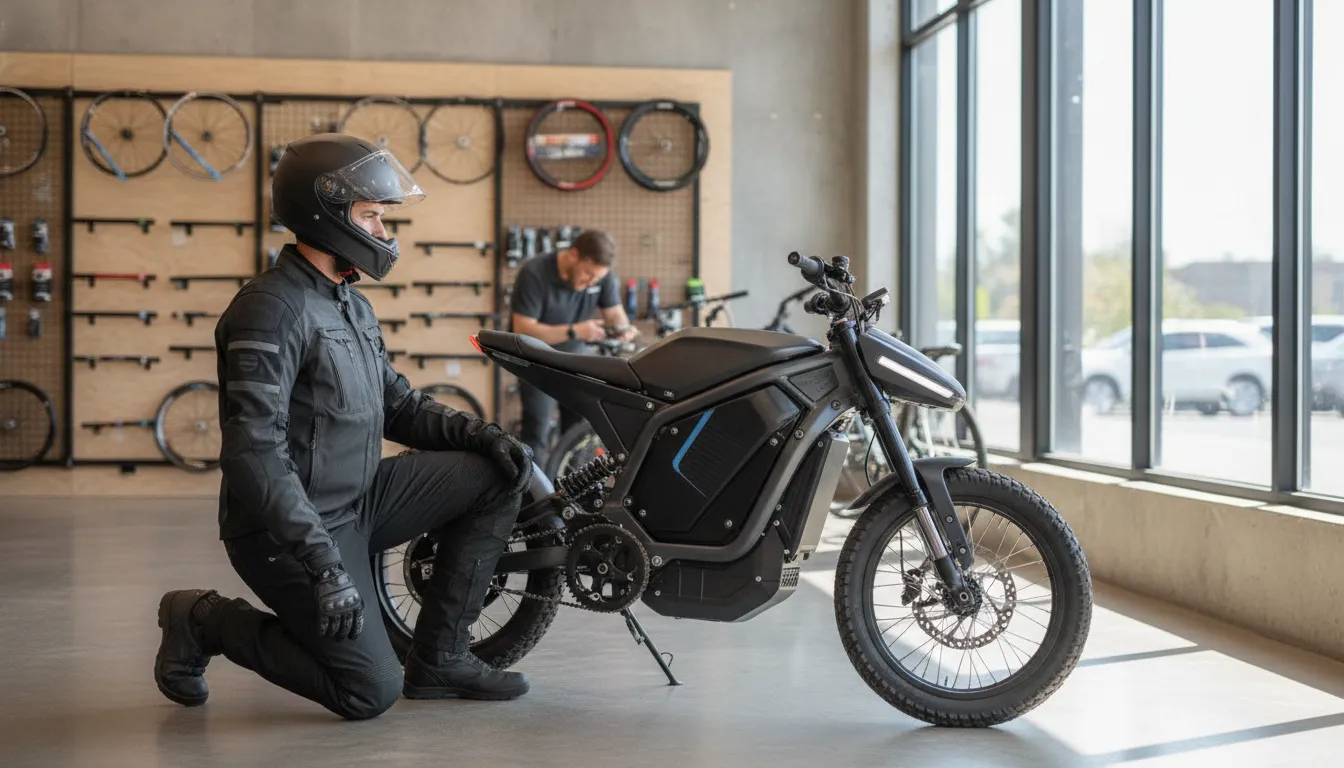
Street legality depends on the exact vehicle and where you plan to ride. Before using an electric motorcycle on an Oregon public road, verify its legal classification. Check registration, motorcycle endorsement, insurance, required equipment, and road-specific rules. An off-road e-moto is not automatically approved for street use, and an electric motorcycle should not be treated as an e-bike without confirming its classification.
Start with the vehicle documentation and the current Oregon requirements that apply to it. A model's appearance, top speed, motor output, or intended audience may not tell you how it is classified. Ask the seller for the exact identification and road-use information, then confirm the requirements with the relevant Oregon authority and your insurer. Rules can also differ between public roads, private property, multi-use paths, and designated trails.
Road, trail, and property rules are different
Central Oregon includes commuting routes, multi-use paths, and extensive trail networks, but access is not interchangeable. A vehicle permitted on one route may be restricted on another because of its classification, equipment, land manager, or local rule. If your plans include trail riding, check the rules for the specific property or trail system before you arrive.
Make safety part of the purchase decision
Legal compliance is only one part of responsible riding. Choose protective equipment appropriate for the vehicle and speed, including a properly fitted helmet and gear that protects your hands, eyes, feet, and other exposed areas. Practice braking, low-speed control, turning, and emergency maneuvers in a controlled location before entering traffic or unfamiliar terrain.
Visibility matters even when a vehicle is quiet. Use required lighting, signal clearly, scan for drivers and trail users, and avoid assuming that others see you. Voltaire's Oregon electric riding safety article provides additional guidance on Oregon rules, equipment, and safer riding habits.
Which Segway or Comparable Electric Motorcycle Should You Consider?
The right electric motorcycle depends less on a list of popular names than on how and where you will ride. Start with road or off-road classification, then compare fit, terrain capability, battery needs, controls, transport, and local service. Treat current specifications, availability, and legal status as details to verify before ordering.
Separate intended use from marketing category. A street-oriented electric motorcycle, an off-road e-moto, an electric dirt bike, and a pedal-assist e-bike can look similar in photographs while having different equipment, handling, and legal requirements. Decide whether your priority is commuting, neighborhood transportation, trail riding, backcountry recreation, utility, or a mixture. The answer narrows the field more effectively than starting with motor output or a claimed top speed.
Use Segway examples as starting points, not assumptions
Voltaire's Segway selection includes models such as the Xyber adventure e-bike, Xafari trail e-bike, Myon commuter e-bike, MUXI utility or cargo e-bike, and Xaber 300 electric dirt bike. These products represent different use cases and should not be treated as interchangeable electric motorcycles. Review the Segway electric mobility options and confirm each live product page for current classification, equipment, fit information, specifications, inventory, and pricing.
If your shortlist includes the Xaber 300, use the Segway Xaber 300 e-moto review for product-specific context, then return to the broader questions in this guide. The goal is to determine whether the intended terrain, controls, maintenance path, transport needs, and applicable rules fit your riding plans.
What Service and Ownership Support Should You Expect?
Good ownership support extends beyond the sale. Expect a service plan that covers routine inspections, electrical diagnostics, battery health, motor and controller systems, software or connectivity, and mechanical components such as brakes, gears, and wheels. Documented checks and a verification test ride help confirm that the vehicle is ready for its next ride.
An electric motorcycle or off-road e-moto has safety-critical mechanical and electrical systems. Before choosing a shop, ask whether its technicians can diagnose the complete system rather than only adjust brakes or replace tires. Voltaire's in-house service center has certified technicians and supports electric vehicle brands beyond those sold in the store. That multi-brand experience can help when you already own a vehicle, are buying online, or need help with a model purchased elsewhere.
What should a routine inspection cover?
A useful inspection starts with the frame, wheels, tires, fasteners, controls, lights, and suspension. The technician should also review brake performance, drivetrain or chain components where applicable, charging equipment, and visible wiring. For a vehicle used on rough Central Oregon roads or trails, inspection frequency should reflect terrain, dust, moisture, mileage, and riding intensity.
For general owner guidance, the electric bike maintenance guide covers routine maintenance, battery care, storage, troubleshooting, and professional service. Some details differ between pedal-assist e-bikes and electric motorcycles, so use the vehicle's documentation and a qualified technician for model-specific requirements.
Why do documentation and a test ride matter?
Written inspection notes create a clearer ownership record and help the rider understand what was checked, repaired, or deferred. A final test ride provides another layer of verification: controls should respond correctly, braking should feel consistent, and unusual sounds or fault messages should be addressed before pickup. Good documentation makes follow-up service easier.
Should You Buy an Electric Motorcycle in Bend or Online?
Buy where you can get the right combination of product fit, delivery confidence, and long-term support. Bend shoppers can sit on a vehicle, discuss intended routes, and take a test ride where appropriate. Online shoppers can compare specifications and arrange delivery, but should confirm assembly, shipping, parts access, and a qualified service option before ordering.
In-person support is valuable when you are deciding between an electric motorcycle, an e-bike, and an off-road e-moto. Bring your normal ride into the conversation: your height, experience, terrain, cargo needs, charging location, storage, and whether public-road use is part of the plan. A good consultation should clarify questions about classification, range, protective equipment, trail access, transport, and service without treating every model as suitable for every purpose.
Online shoppers should request the exact current specifications and confirm what arrives assembled, what requires final setup, and what tools or adjustments are needed. Ask how warranty or service questions are handled after delivery. A product can be a strong technical match and still be a poor ownership fit if routine service is difficult to access.
Frequently Asked Questions
Is an electric motorcycle the same as an electric bike?
No. An electric motorcycle typically uses motorcycle-style controls and may have different performance, equipment, registration, and road-use requirements. A pedal-assist electric bike is a bicycle with electric assistance. Confirm the exact product classification instead of relying on appearance or marketing language.
How far can an electric motorcycle travel on one charge?
Range varies by battery, speed, terrain, rider weight, payload, temperature, riding mode, and battery condition. Use the published figure as a reference, then leave reserve for hills, wind, cold weather, stops, and the return trip. Ask how range was measured before comparing models.
Can I ride an electric motorcycle on Oregon roads or trails?
Possibly, but access is not automatic. Verify the vehicle's classification, required equipment, registration, endorsement, insurance, and the rules for each road, path, property, or trail system. An off-road e-moto may not be approved for public-road use, even if it resembles a motorcycle.
What safety gear should I use?
Use a properly fitted helmet and protective gear suited to the vehicle, speed, terrain, and weather. Gloves, eye protection, durable clothing, and protective footwear are sensible starting points. Practice braking, turning, low-speed control, and emergency maneuvers in a controlled location before riding in traffic or unfamiliar terrain.
Should I buy locally or order online?
Either can work when the vehicle fits your route and you have a realistic support plan. Local buying adds hands-on fit guidance, test-ride access, and nearby service options. Online buying offers broader shopping access, but confirm the exact specifications, setup needs, delivery details, parts access, warranty process, and service availability before ordering.
Ready to Find the Right Electric Motorcycle?
Start with your route, classification, fit, range reserve, charging routine, safety equipment, and service plan. For Bend and Central Oregon riders, a hands-on conversation can turn a broad search into a practical shortlist. Online shoppers can use the same questions to compare options with greater confidence.
Compare electric mobility options with Voltaire Cycles and request guidance for your next ride.