

Electric Bike Repair Bend Oregon: What Local Service Covers
When an e-bike stops assisting, makes a new noise, or feels different under braking, it can be hard to know whether the cause is electrical, mechanical, or both. Electric bike repair Bend Oregon riders seek can include a careful diagnosis of the battery system, motor, controls, brakes, wheels, and other components. A clear first step is to describe what changed and when it happens.
Call to discuss your e-bike repair
What can electric bike repair in Bend, Oregon include?
Repair starts with understanding the symptom, then checking the relevant systems rather than replacing parts on a guess. A technician may inspect the bike mechanically, check visible electrical connections, and use the manufacturer’s approved diagnostic process where available. The goal is to identify a likely cause, explain the next step, and confirm any proposed work with you.
Voltaire Cycles of Central Oregon services multiple e-bike brands, not only bikes purchased at the shop. Exact repair options depend on the bike, its components, access to compatible parts, and the issue found. Some problems are straightforward adjustments; others need deeper testing or manufacturer-specific support.
A general bicycle-service directory describes common mechanical work such as brake and shifting adjustments, wheel truing, and tune-ups. That is a useful reminder that an e-bike still needs ordinary bicycle care alongside its electrical system. See an example of bicycle mechanical service work.
How does an e-bike diagnostic appointment work?
A useful diagnostic begins with the rider’s description and a repeatable symptom. Note whether the problem happens at startup, while pedaling, under load, after the bike warms up, or only on a particular route. If a display shows an error message, record the exact wording or code and take a photo. That detail can help narrow down what the technician needs to inspect.
From there, a service check may include a visual inspection, a short functional test when appropriate, and checks of the affected mechanical or electrical systems. A technician may inspect connectors and wiring for obvious damage or looseness, verify basic controls, and assess the bicycle’s mechanical condition. The exact diagnostic process varies by brand and model; not every e-bike uses the same software or service tools.
- Describe the symptom. Say what the bike does, what it should do, and whether the issue is constant or intermittent.
- Share recent changes. Mention a fall, transport, storage change, repair, accessory installation, or software update if relevant.
- Bring the equipment needed to reproduce it. Include the battery, display, keys, charger, or other removable parts related to the issue.
- Ask what happens next. Confirm whether the shop needs more time to diagnose the issue before it can give a repair estimate.
A diagnostic is not the same as an automatic repair authorization. Ask the service team to explain what they found, which work is recommended, and whether they will contact you before doing additional work.
What battery and charging problems should be checked?
Battery complaints can have several causes, so a single symptom does not prove the battery itself has failed. A bike that will not power on might have an issue with the charge level, battery seating, a connection, a control, or another part of the system. Shorter-than-expected range can also reflect assist settings, route, temperature, tire pressure, rider and cargo load, or battery condition.
For a battery concern, bring the battery and its charger if they are removable. Tell the technician how the battery was charged and stored, whether the charger indicator behaves differently than usual, and what the display shows. Avoid opening the battery case or attempting a home electrical repair. If a battery is visibly damaged, unusually hot, swollen, leaking, or giving off an unusual odor, stop using or charging it and seek professional guidance on safe handling.
Use the charger specified for the bike. Chargers that look similar are not necessarily interchangeable. If the charging port or plug is damaged, do not force the connection. A service professional can assess whether the concern appears to involve the charger, battery, connection, or another system component.
When do motor, display, or control issues need service?
Motor and control symptoms can overlap. A motor that cuts in and out, assist that does not respond, a display that goes blank, or a new sound under power can have different causes. Loose or damaged connections, a control setting, a sensor, or a component fault may all deserve inspection. A technician should identify the bike’s make and model before selecting the right diagnostic approach.
Do not repeatedly ride a bike that surges unexpectedly, loses assistance in a hazardous situation, or makes a severe new grinding noise. If the bike can be moved safely without powering the motor, leave the system off and ask the shop how to bring it in. Share any error code rather than clearing it before the appointment; that information may help the service team.
Some shifting or drive concerns may involve both electrical assist and ordinary drivetrain parts. For example, riders with a compatible mid-drive setup may ask whether a gearsensor component is relevant to a particular build. Compatibility is not universal, so treat a product listing as a discussion point, not a diagnosis or promise that a part will fit.
What brake and wheel repairs are common on electric bikes?
E-bikes place the same basic demands on brakes, tires, wheels, and bearings as other bicycles, with the bike’s design and use affecting inspection needs. A rubbing brake, pulsing lever, worn pad, loose wheel, damaged tire, or spoke problem can change how the bike handles. Do not wait for a minor brake concern to become severe before asking for an inspection.
Brake service can involve checking pad wear, rotor condition, alignment, lever feel, and the hydraulic or cable system fitted to the bike. The correct part depends on the brake model and its specifications. A disc rotor listing is one example of a component to identify, but a matching diameter alone does not establish compatibility. Have the bike checked before ordering a replacement part.
Wheel work may include checking tire condition and pressure, looking for a damaged rim, assessing spoke tension, or truing a wheel. Note whether a wobble or sound happens at a particular speed or when braking. If you are replacing a tire, confirm its size and clearance for your specific bicycle; a tire listing should not be treated as a fit guide for every e-bike.
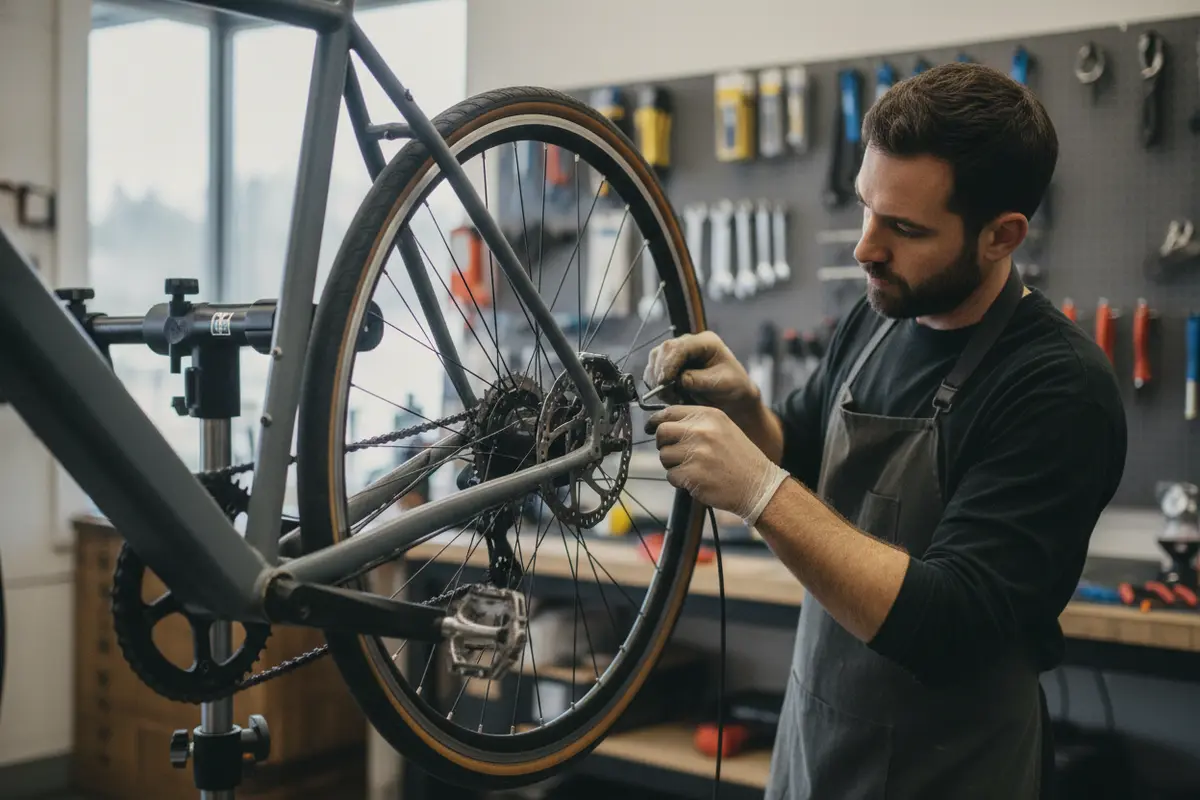
Can a shop help with e-bike software and electrical connections?
Sometimes a problem is related to a setting, connection, sensor, or software process; sometimes it is mechanical. The right approach depends on the manufacturer and model. A shop may be able to inspect and diagnose supported systems, but software access and repair options are not identical across brands. Bring the bike’s model information and any error message, and ask what diagnostic support is available before assuming a particular update or reset will solve the issue.
Avoid advice to cut, splice, or bypass wiring, disable safety features, or install an unverified software modification. Such changes may create new faults or affect the safe operation of the bike. Keep the system in its normal configuration and let the technician know about any accessories or modifications that could be related to the symptom.
How are estimates and repair decisions handled?
The cost and time involved depend on what the inspection finds, the parts required, and whether the bike needs brand-specific troubleshooting. Because no two symptoms have exactly the same cause, it is sensible to ask about the diagnostic process and estimate before authorizing repair. If a problem cannot be confirmed until the bike is tested or opened for inspection, ask how the shop will keep you informed as it learns more.
| Service situation | What the shop may need | What to clarify |
|---|---|---|
| Unclear electrical symptom | Bike, battery, charger, display or error-code details | What diagnostic checks are possible for this model? |
| Brake or wheel concern | Complete bicycle and a description of when the symptom occurs | Which parts or adjustments are recommended? |
| Part replacement | Make, model, component details, and existing part when useful | Is the part compatible, available, and included in the estimate? |
| Intermittent issue | Symptom notes, photos or video, and recent repair history | Can the issue be reproduced, and what is the next step if not? |
Before work begins, make sure you understand what the estimate covers and whether the shop will seek approval if the plan changes. If the bike needs a part that is not immediately available, ask about expected next steps rather than assuming a completion date.
How should you prepare an e-bike for drop-off?
A little preparation makes it easier to assess the bike and reduces back-and-forth. You do not need to diagnose the problem yourself. A concise, accurate account of what you noticed is more helpful than guessing which component has failed.
- Write down the make and model. Include the model year if known, and note whether the bike has been modified.
- Describe the issue in plain language. Include when it started, how often it happens, and what you were doing at the time.
- Capture useful evidence. Photograph error messages and, if safe, record a short video of a noise or intermittent symptom.
- Bring relevant accessories. Ask whether to bring the battery, charger, keys, display, or a removable control. A portable pump may be useful for routine tire care, but it is not a substitute for wheel or brake inspection.
- Remove personal cargo. Take bags and other loose items off the bicycle unless the shop asks you to leave a particular accessory in place.
- Ask about safe transport. If the bike has a damaged wheel, brake, battery, or electrical system, call first for guidance instead of riding it to the shop.
For a bike that will not power on, do not spend time trying random resets or repeatedly connecting a charger. Keep the bike and battery in their normal condition, note what you already tried, and let the technician know. If you are unsure whether a battery is safe to transport, ask for instructions before moving it.
When does repair make sense, and when should you ask about an upgrade?
Repair is usually the first question when the bike fits the rider and the problem has a clear service path. An upgrade discussion may make sense when a component is incompatible with how you use the bike, a part is no longer suitable, or you are considering changing a conventional bicycle with an electric-assist system. A conversion is a separate project from repairing an existing factory e-bike. For example, the Copenhagen Wheel conversion product is one option to discuss when exploring electrification, but suitability depends on the original bicycle and the conversion system’s requirements.
Ask the service team to separate the immediate safety or reliability concern from optional changes. That helps you compare the repair recommended for the current issue with any longer-term plan, without treating an upgrade as a required repair.
Where can you get electric bike repair in Bend, Oregon?
For local riders, the benefit of a Bend shop is being able to bring the complete bicycle in for an assessment and talk through its symptom with a service team. Voltaire Cycles of Central Oregon provides multi-brand electric bike service and repair. Calling ahead is useful if your bike has a battery concern, an unusual error message, or a problem that makes riding unsafe. If you are still comparing models or service needs, a test ride and in-person consultation can also help you understand how a bike feels before you decide.
Call Voltaire Cycles to discuss service and next steps
Frequently asked questions
Can you service an electric bike bought somewhere else?
Voltaire Cycles of Central Oregon services multiple brands, including bikes not purchased at the shop. Support depends on the bike’s make, model, components, and the type of repair needed, so call with those details before bringing it in.
Should I bring the battery and charger to a repair visit?
If the problem involves charging, power, or range, bring the battery and its charger when it is safe to do so. For other concerns, call ahead to confirm what equipment the service team needs.
Can I keep riding if my e-bike has a brake or motor problem?
Do not ride if the brakes are not working correctly, the bike behaves unpredictably, or a battery appears damaged. If you are uncertain, switch the system off and ask the shop how to transport the bike safely.
What should I do if the display shows an error code?
Record the exact code or message and take a photo. Avoid clearing it before you speak with the service team, since the displayed information may help identify the right diagnostic steps.
Clear symptom notes, the right accessories, and an agreed estimate help make an e-bike service visit more productive. When a problem affects braking, steering, battery condition, or predictable motor assistance, stop riding and ask a qualified service team what to do next.