

Electric Bike Cost of Ownership: What to Budget Beyond the Purchase
The purchase price is only one part of electric bike cost of ownership. To budget beyond the purchase, consider charging, routine service, wear items, storage, transport, and how you plan to ride. The right estimate depends on the bike, distance, terrain, and care it receives, so this guide gives you a practical framework rather than a one-size-fits-all annual figure.
Call for a free electric bike consultation
What belongs in an electric bike cost of ownership budget?
Think in two groups: recurring costs and occasional costs. Recurring costs include electricity and routine checks. Occasional costs include tires, brake service, drivetrain parts, battery replacement, and transport equipment. Some riders spend little on wear items in a quiet, short-distance year; frequent riding on rough or steep routes can bring service needs forward.
Start by writing down your expected yearly mileage and typical conditions. A commuter who rides every weekday has a different wear pattern from someone who takes occasional weekend rides. Add a separate reserve for unexpected repairs instead of assuming every year will be identical. This approach makes your estimate more useful than multiplying a generic annual number by the years you expect to own the bike.
Separate expenses you can estimate now from costs that remain uncertain. A purchase checklist might include likely annual electricity use, the maker's inspection recommendations, your usual tire and brake needs, and whether you need a secure lock or transport solution. Mark unknown figures as questions for the retailer or service shop. This avoids false precision and gives you a fair way to compare two bikes with different equipment or support arrangements.
How much should you budget for electric bike charging?
Charging is often easy to overlook because electricity is used in small amounts over many rides. Estimate it from your battery's stated capacity, your local electricity rate, and how often you recharge. The battery capacity is usually expressed in watt-hours (Wh). Converting Wh to kilowatt-hours (kWh) means dividing by 1,000. For a rough upper-bound calculation, multiply the battery's kWh by your rate per kWh and by the number of full-capacity charges in a year. Actual energy drawn from the wall and charging habits vary.
For example, a 500 Wh battery holds 0.5 kWh of nominal energy. If you use a full equivalent charge weekly, the simple estimate is 0.5 multiplied by 52, or 26 kWh a year, before allowing for charging losses. Multiply that by the price on your electricity bill. If you top up only part of the battery, or ride less often, the total will be lower. This is a planning example, not a promise about any particular model's range or efficiency.
Use the charger specified for your bike and follow its instructions. Avoid budgeting around an assumed charger replacement unless you have a reason to expect one; instead, confirm what charger comes with the model before buying. The E-Bike Buyers and Owners Guide is a useful starting point for ownership questions.
Which wear items affect electric bike cost of ownership?
Tires, brake pads, chains, and other drivetrain parts wear with use. The timing depends on mileage, rider and cargo weight, weather, route surface, hills, and maintenance. Electric assistance can mean more riding, and a heavier bike may place different demands on components than a conventional bicycle. Follow the bike and component makers' maintenance guidance and have unusual noises, poor braking, or shifting problems checked promptly.
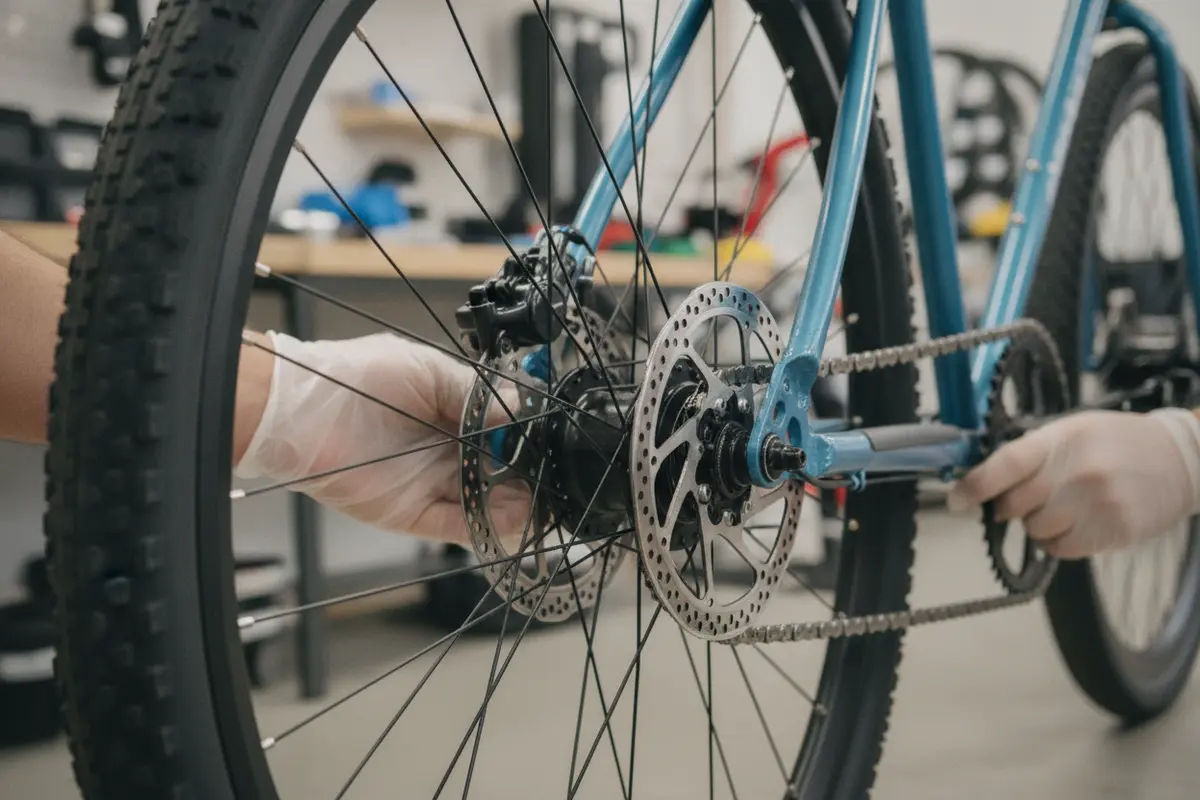
A simple inspection routine helps you notice issues before a ride becomes inconvenient. Check tire pressure and visible tire condition, test the brakes, and look for a chain that is dirty, dry, or noisy. These checks do not replace scheduled service, but they help you plan. A basic pump can support regular tire care; a floor pump option is one example of a tool riders may consider.
Ask a service shop what inspection intervals make sense for your bike and riding conditions. Keep notes on service dates and parts replaced. That record can help you distinguish routine wear from a new problem and makes it easier to plan for the next season. Voltaire Cycles works with multiple brands, so riders can seek help with service questions even when they are still comparing equipment.
It can help to treat maintenance as a calendar habit rather than waiting for a problem. Before a busy riding season, check tires, brakes, lights, fasteners, and shifting. After a wet or dusty ride, clean the bike as the maker recommends and dry it before storage. Do not use a cleaning method that could force water into electrical components. If a noise, loose part, or braking change persists, ask a qualified technician instead of guessing at an adjustment.
How should you plan for battery care and eventual replacement?
The battery is a major component, but its service life is not a fixed number of years for every owner. Use and storage habits, temperature, charging practices, and the battery's design all matter. Follow the manufacturer's instructions for charging, storage, and temperature limits. Avoid leaving a battery exposed to conditions that its manual warns against, and ask the seller about replacement availability and warranty terms for the specific model before purchase.
Do not treat a future battery replacement as a guaranteed expense on a particular schedule. Instead, create a reserve based on the model's current replacement information if available, and revisit that estimate as the bike ages. Confirm whether the battery is removable, how it is stored, and whether service or replacement requires a particular provider. These are useful questions to ask before you commit, especially if you depend on the bike for daily transportation.
Ask what signs should prompt a battery inspection and what steps to take if the battery behaves differently than expected. Avoid opening or modifying a battery yourself. Note the model and serial information and keep purchase and warranty records where you can find them. If you store the bike for a season, use the storage level and conditions specified by the manufacturer rather than applying a rule meant for a different battery system.
What other ownership costs are easy to miss?
Transport and storage can affect your budget as much as maintenance. If you plan to carry an e-bike by car, check the bike's weight, the carrier's limits, hitch compatibility, and how the bike is secured. Do not assume an existing rack will safely carry an electric bike. A compatible hitch rack option may be relevant, but verify fit and capacity for your own vehicle and bike before purchasing.
Also consider a secure place to park and charge, a lock, lights, and any bags or fenders that suit your routes. Not every rider needs the same accessories. Separate essentials from upgrades: first cover safe riding, secure parking, and practical transport, then decide which convenience items matter to you.
For daily riders, small planning details can affect whether a bike stays convenient. Think about where it will be stored at work, whether you can bring the battery indoors if the maker allows it, and whether your route needs lights or a way to carry essentials. If you use a rack, budget time as well as money for loading and securing the bike. A setup that is awkward may lead you to ride less or leave useful equipment at home.
Use this table to organize a personal estimate. It intentionally avoids fixed prices because parts, local labor, electricity rates, and riding habits differ.
| Budget area | How to estimate it | When it may come up |
|---|---|---|
| Electricity | Battery kWh × local rate × equivalent charges | Across regular charging throughout the year |
| Wear items | Ask for model-specific service guidance; track mileage and replacements | As tires, brakes, chain, or other parts wear |
| Battery reserve | Check current replacement information and warranty terms for the model | Only if age, condition, or a fault makes replacement necessary |
| Transport and storage | Check rack capacity, vehicle fit, lock needs, and secure storage | Before carrying or parking the bike regularly |
| Service reserve | Ask a qualified shop about inspection and repair needs for your use | Routine checks or when a concern arises |
How can you keep service costs predictable?
Good planning starts before you choose a bike. Match the bike to your real riding: everyday commuting, paved paths, hills, cargo, or recreation. A model that fits your needs can reduce the temptation to add unsuitable upgrades later. Compare what is included, what maintenance the maker recommends, and whether local help is available. Consider shopping Voltaire Cycles' electric bike selection with those questions in mind.
Before buying, ask the shop to explain the controls, battery care, tire and brake checks, and the route to service if something feels wrong. In Bend, a showroom conversation and test ride can help reveal fit and handling preferences that are hard to judge from a product description alone. Online shoppers can use the same checklist when comparing models and can contact the retailer for product guidance.
When service is needed, describe the symptom, when it began, and whether it happens under a particular load or condition. Do not keep riding if braking or another safety-critical function seems compromised. For compatibility questions about a charger or component, provide the bike's exact model and relevant details rather than selecting a part based only on appearance. A compatible charger listing, for instance, should not be assumed suitable for a different bike without verifying specifications.
How do you compare the total cost of two electric bikes?
Compare the same ownership period and the same kind of use. List purchase price separately, then add what you can reasonably estimate for electricity, routine service, expected wear parts, and transport. Keep uncertain items, such as eventual battery work, in a clearly labeled reserve rather than presenting them as guaranteed costs. If a retailer cannot confirm a detail, mark it as unknown and ask before purchase.
- Choose an ownership period, such as the years you realistically expect to keep the bike.
- Estimate annual riding and charging using the battery capacity and your local electricity rate.
- Ask about recommended inspections, wear parts, and service access for each model.
- Check battery warranty and replacement details, plus rack or storage needs.
- Compare the resulting ranges, not just the purchase prices, and note assumptions.
One bike may cost more at checkout but include features you value, while another may need a separate rack or other equipment for your use. The best choice is the one whose capabilities, support, and likely expenses fit your priorities—not necessarily the lowest initial price.
For a more useful side-by-side estimate, make one column for each bike and use identical assumptions. If one model comes with a charger or a rack solution you need, record that as included equipment rather than treating it as an ongoing saving. If a specification or warranty detail is unclear, leave the cell marked pending and confirm it before deciding. This simple worksheet makes omissions visible without pretending to predict every repair.
What questions should you ask before buying?
- What charger is included, and what charging instructions apply to this exact model?
- What routine checks and service intervals does the manufacturer recommend?
- Which components are likely to wear given my mileage, terrain, and riding style?
- What warranty applies to the battery, and how can I confirm replacement options?
- Can my current vehicle rack carry this bike safely, including its weight and dimensions?
- Where can I get help if I have a problem, and what information should I bring?
Talk with a local electric bike expert
Budgeting beyond the purchase price is an exercise in matching estimates to your riding plans, then leaving room for normal uncertainty. With a clear checklist and model-specific answers, you can compare ownership costs confidently and choose an electric bike that suits your life.