

Electric Bike Battery Winter Storage: Cold-Weather Checklist
Electric bike battery winter storage takes more than parking a bike in a corner until spring. In Central Oregon, cold nights, dry indoor heating, and long stretches without riding make deliberate preparation worthwhile. Use the maker’s instructions for your exact model, then check the whole bicycle before putting it away.
Schedule a seasonal service check
What is the safest approach to electric bike battery winter storage?
Keep the battery in a dry indoor location, follow its maker’s charge and temperature guidance, and inspect it at the stated interval. Batteries and bike systems differ, so a general rule from another brand may not apply to your pack. The owner’s manual is the authority for its storage range, charge state, removal process, and restart instructions.
Before storage, locate the manuals for both the bicycle and battery. Write down the maker’s recommended storage charge, temperature range, and inspection interval. If the information is missing, contact the manufacturer or a qualified service provider rather than guessing. Avoid relying on a percentage or temperature copied from a different battery model.
Plan the storage job as a short sequence: clean and dry the bicycle, inspect for damage, prepare the battery according to its instructions, then select a stable storage location. This order reduces the chance of putting away a wet bike or charging a pack before noticing a problem.
How should you set charge for winter storage?
Charge level matters when a bicycle may sit unused for weeks or months. The correct storage state varies by battery model. Follow the manual’s specific target and charging procedure, rather than assuming that fully charged, nearly empty, or a generic midpoint is right for every pack.
- Read the battery manual and note the specified storage charge or state-of-charge range.
- Check that the battery is within its allowed temperature range before charging.
- Use the supplied or manufacturer-approved charger and the intended charging location.
- Disconnect the charger when the instructions say to do so; do not leave the pack connected indefinitely.
- Set a calendar reminder to inspect or recharge it only at the interval and in the manner the maker specifies.
Do not charge a visibly damaged battery. Monash University’s e-bike and scooter safety guidance identifies swelling, bulging, and visible cracks as signs of possible battery damage. Stop using a pack with these signs and seek appropriate guidance. Do not open the case, bend it back into shape, or try to repair internal cells yourself.
Where should the battery stay during a Central Oregon winter?
Choose a dry indoor location within the battery maker’s specified storage temperature range. “Indoors” is not enough if the location has extreme temperature swings, a water leak, or direct exposure to heat. A dry room or protected area that stays within the manual’s limits is preferable to an uninsulated shed, damp basement corner, hot attic, or spot beside a heater.
- Keep the pack away from direct sunlight, heaters, fireplaces, and other heat sources.
- Do not place it where water can drip onto it or where it sits on a damp floor.
- Keep the battery contacts away from keys, tools, and other metal objects.
- Use a terminal cover if one was supplied, and keep the pack where it cannot fall or be crushed.
- Leave enough access to inspect it without shifting heavy objects or disturbing the bike.
Do not seal a battery or damp bicycle in an airtight container. The aim is a clean, dry, stable environment, not an improvised enclosure. If your available storage space is cold or unheated, compare its likely conditions with the manufacturer’s stated limits and ask the maker for advice if they do not match.
Should you remove the battery before storing the bicycle?
If the battery is designed to be removable, taking it indoors can make it easier to keep within its recommended conditions. Follow the bike’s removal steps, switch the system off first, and never force a pack that resists removal. Store its key and any port cover in a known place so the pack can be reinstalled without searching or prying.
Some models have integrated batteries or special locking and connector systems. Check the manual before attempting removal. If the mount, latch, connector, or cable looks damaged, stop and ask a service technician to inspect it. Do not pull on wiring or use tools to lever a battery from its housing.
When a removable pack is indoors and the bicycle remains in a cooler garage, keep the bike’s battery bay clean and dry. Do not let loose metal items touch exposed contacts. When reinstalling the pack, make sure it seats as the manufacturer describes; a battery that does not lock or connect normally is a reason to stop before riding.
How can you protect the bicycle from moisture?
Wipe the bicycle dry before storage, especially after a wet ride or wash. Let it dry fully before covering it. A breathable cover in a dry indoor space is preferable to wrapping a damp bicycle in plastic. Avoid directing water or cleaner into electrical connectors, displays, switches, or the battery compartment.
Inspect the charging-port cover, visible cables, and connectors for dirt, moisture, or damage. If you see corrosion, exposed wiring, or a loose connection, leave the system off until it has been evaluated. Do not plug in a wet connector just because the battery appears dry. If the bike was stored somewhere damp, allow it to dry and have questionable electrical areas checked before powering up.
Cleaning does not require a complicated process. Use a soft cloth and products suitable for the bicycle’s finish and components. Keep cleaners away from seals and electrical interfaces unless the manufacturer permits their use there. Once dry, cover the bike loosely enough to avoid trapping remaining moisture and keep it out of a path where it might be knocked over.
What should you inspect before storage?
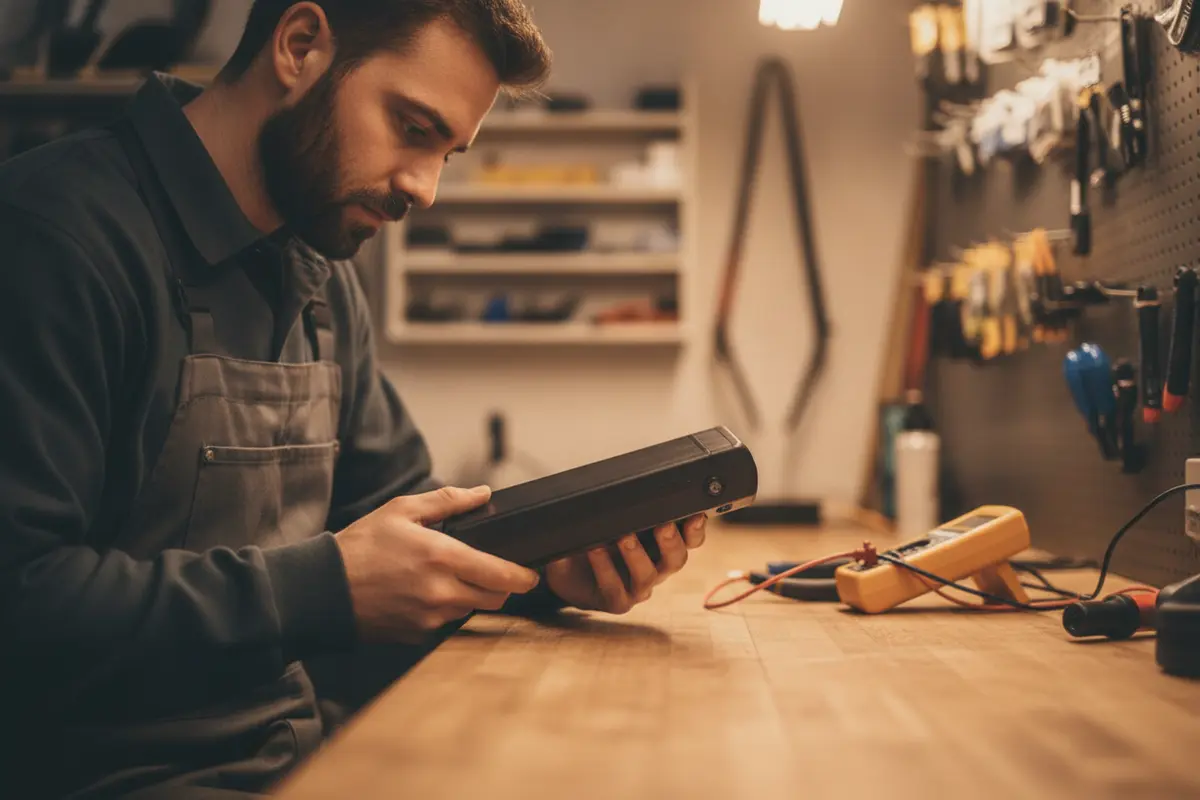
A simple pre-storage inspection can identify problems before they become a spring surprise. Work through the bike in good light. If you find a safety concern or a component you do not know how to assess, note it and arrange service rather than attempting a repair beyond your experience.
- Battery case: Look for cracks, swelling, unusual heat, impact marks, or liquid exposure. Do not charge a damaged pack.
- Battery mount and contacts: Check for a loose latch, visible dirt, corrosion, or damaged plastic. Do not scrape or sand electrical contacts.
- Charger and cable: Look for cuts, crushed sections, bent connectors, or damaged insulation. Use only the charger approved for that system.
- Tires: Look for cuts, embedded debris, sidewall damage, and low pressure. Record any issue for repair.
- Brakes: Check lever feel and look for obvious damage to pads, rotors, or cables. Do not ride if braking is unreliable.
- Drivetrain: Wipe away dirt and apply suitable bicycle chain lubricant if needed, taking care not to contaminate brake surfaces.
- Controls and display: Check for cracked screens, damaged buttons, loose cables, or signs of moisture.
- Accessories: Remove or secure loose bags and equipment that could shift, fall, or press against cables during storage.
Make a short note of anything unusual: when it occurred, what warning appeared, whether the battery was hot or cold, and what you were doing when you noticed it. That information can help a technician understand the issue. For a multi-brand inspection or repair, see the all-brand bicycle repair and service page. Voltaire Cycles of Central Oregon provides service in Bend.
How do you care for tires and the stored bike?
Store the bicycle so it is stable and protected from impacts, dripping water, and temperature extremes. Keep it upright on a secure stand or hanger made for the bike’s weight. Do not hang it by a cable, brake hose, display, or battery case. If the bike rests on its tires, avoid leaving a tire completely flat beneath the bicycle’s full weight.
Check tire pressure periodically during a long storage period, using the tire or bicycle maker’s recommendations. Tires can lose air while sitting. Recheck before the first ride rather than assuming the pressure is unchanged. Look at the tread and sidewalls again in spring; a tire can appear inflated yet still have a cut or embedded object that deserves attention.
Keep the bicycle’s storage area clear enough to reach it without moving boxes onto the frame or battery. Avoid placing heavy objects on a rack, handlebar, or wheel. If you need to move the bike to reach the battery, do it carefully and keep fingers away from pinch points around the folding parts or stand.
| Area | Before storage | During storage and restart |
|---|---|---|
| Battery | Follow the model’s charge and temperature directions; inspect for damage. | Check only at the maker’s stated interval; inspect again before charging. |
| Location | Choose a dry indoor space within the specified temperature range. | Keep clear of moisture, heat, direct sun, and impact hazards. |
| Electrical parts | Dry the bike; check visible cables, ports, and covers. | Do not power or charge a wet or damaged system. |
| Tires and frame | Check tire condition and position the bicycle securely. | Recheck pressure, brakes, and stability before riding. |
What changes if the bike stays in an unheated garage?
An unheated garage can make winter storage more complicated because temperature and humidity may vary. Do not assume the battery is safe simply because the bicycle is under a roof. Compare the garage conditions with the exact battery’s storage limits, particularly during cold snaps and when daytime warming causes condensation on cold objects.
If the pack is removable and the manual permits removal, you can store it separately in a suitable indoor location while leaving the bicycle in the garage. Keep the bike dry and avoid covering it while moisture remains. If the battery is integrated, ask the manufacturer or a qualified service provider what to do when the available storage area falls outside the stated range.
When moving a cold battery into a warmer space, do not immediately charge it. Follow the maker’s temperature instructions and allow it to reach the permitted charging range. If moisture is visible, wait until the system is dry and consult the manual before reconnecting or charging. The same cautious approach applies when moving a warm battery into a very cold area.
How do you restart the e-bike in spring?
Before charging or reinstalling the battery, bring it into the temperature range required by its manufacturer. Inspect the case, contacts, and charging port for damage or moisture. Use the approved charger and procedure. If the battery is swollen, cracked, wet, or otherwise damaged, do not charge or ride until it has been evaluated.
- Inspect the battery case, latch, and contacts; stop if there is visible damage.
- Confirm the battery is within the manufacturer’s charging temperature limits.
- Check that the charger, cable, and outlet are appropriate and undamaged.
- Charge using the prescribed procedure and watch for normal indicator behavior.
- Reinstall the battery as directed, ensuring it locks or connects normally.
- Check tires, brakes, lights, cables, and drivetrain before powering up.
- Take a short test ride in a safe area and listen for unusual sounds or warnings.
If the battery will not charge, an error appears, or the bicycle behaves differently, stop and seek qualified service. Avoid repeating charging attempts when there is visible damage or an unexplained fault. A short pre-ride check is useful even if the bike was stored carefully, because tires lose air and components can shift while stationary.
When should you book seasonal service?
Arrange an inspection before storage if you notice brake or shifting problems, damaged tires, error messages, unusual battery behavior, or wiring that needs attention. A spring service visit can also make sense if the bicycle spent winter in a damp or very cold location, or if you are uncertain whether a battery mount or connector is secure.
Keep the manual, charger, and notes about any warning or unusual behavior available when you ask for help. Tell the service provider where the bike was stored and whether the battery was removed. These details can make it easier to decide what inspection is appropriate. Voltaire Cycles of Central Oregon offers multi-brand bicycle service in Bend; see the service and repairs page to arrange a check.
If you are considering a different electric bike for next season, the electric bike collection offers a place to compare options. For a practical discussion of fit and intended use, call the shop at (541) 350-0669.
Frequently asked questions
Can I leave the battery on the bike all winter?
That depends on the bike design, storage location, and manufacturer guidance. If the pack is removable, storing it indoors can help keep it within recommended conditions. Check the manual to see whether the maker recommends removing it and how to store the bike’s exposed contacts.
Can I charge the battery as soon as it comes in from the cold?
Check the maker’s temperature limits first. Allow the battery to reach the specified charging range before connecting the approved charger. Do not charge a wet or damaged battery.
What should I do if the battery is cracked or swollen?
Do not charge, use, open, or attempt to repair it. Keep it away from combustible materials and seek instructions from the battery maker or a qualified service provider on safe next steps.
How often should I check a stored battery?
Follow the schedule in the battery manual. The interval and procedure vary by model, so set a reminder based on the maker’s guidance and do not create a charging routine from a different battery’s instructions.
Should I store the charger with the battery?
Keep the approved charger somewhere dry and protected from damage, but do not leave it plugged into the battery unless the manufacturer explicitly directs that. Store the charger and any battery keys where they can be found easily in spring.
Book a seasonal service check in Bend
With the battery stored according to its instructions and the bicycle kept dry, stable, and ready for inspection, you will be better prepared for the first spring ride.