

Electric Bike Battery Fire Prevention: Safe Charging Guide
Electric bike battery fire prevention starts with a simple rule: use the battery and charger intended for your bike, and do not charge a pack that looks or behaves abnormally. Lithium-ion batteries can overheat if damaged or defective, so a few careful habits around charging, inspection, and storage matter. This guide covers practical steps for riders at home and on the go.
Call for a free battery safety consultation
What does electric bike battery fire prevention involve?
Electric bike battery fire prevention means reducing avoidable risk at every stage: choose compatible, properly certified equipment; check the pack before use; charge in a sensible location while present; and stop using a battery that is damaged, unusually hot, swollen, leaking, or giving off an odor. No habit can make a lithium-ion battery risk-free, but recognizing warning signs and avoiding improvised repairs can help protect people and property.
Start by reading the bike and battery maker's instructions. The exact charging, storage, and temperature limits depend on the specific system. Keep those instructions with the bike, and ask a qualified service professional if you cannot confirm whether a charger or replacement pack is compatible. Voltaire Cycles offers multi-brand repair and service; the all-brands repair and service page explains how to seek help.
How do you choose a safer battery and charger?
Use the battery supplied for the bike or a replacement approved for that exact system. The charger must match the battery's specifications and be approved by its manufacturer. Similar-looking plugs do not prove that two chargers are electrically compatible. Do not adapt connectors, alter wiring, or use a charger just because it fits.
When shopping, look for products tested to applicable safety standards and follow the manufacturer's installation and charging directions. Ask the seller or maker which standard applies to the complete battery system; a label on one component alone does not establish that every component in a mixed setup is suitable. Avoid unknown, damaged, or visibly modified packs and chargers.
A certified technician can help check a system when its history is unclear. Voltaire's Segway collection is a place to review the brand's available products, while any battery or charger choice should still be confirmed against the specific bike's manual.
What should you inspect before charging?
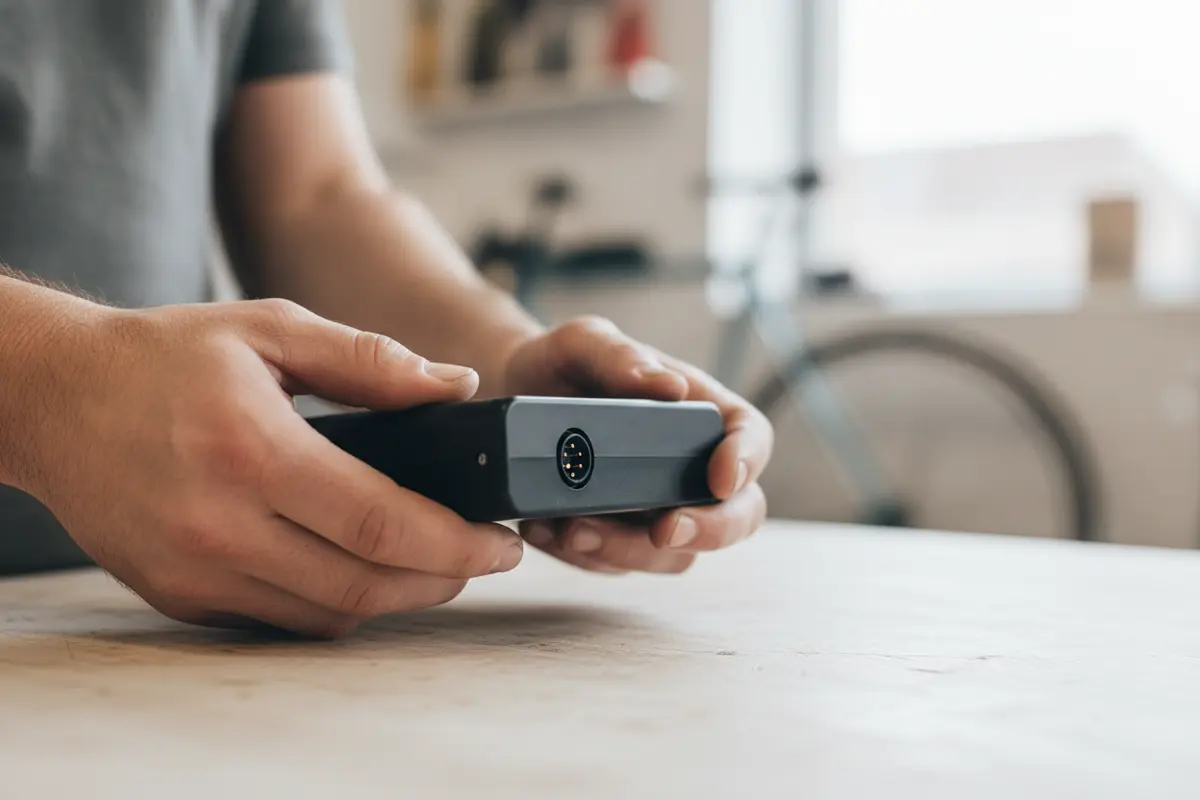
Make a quick visual and sensory check before connecting power. Look at the battery case, mounting points, wiring, charging port, and charger. Stop if you notice cracks, crushing, punctures, swelling, a loose connector, corrosion, exposed wires, liquid, a burnt smell, or unusual heat. Do not open the pack to investigate.
- Check for a fall, collision, water exposure, or other event that may have damaged the pack.
- Look for changes in fit, shape, or surface condition; do not force a battery into its mount.
- Check the charger cable and plug for cuts, scorching, bent pins, or looseness.
- Note whether the battery or charger becomes unusually hot, makes unexpected sounds, or produces an odor during use.
Do not charge or ride with a suspect battery. Keep it away from people, pets, exits, and combustible items if it can be moved safely without handling a hot, leaking, smoking, or unstable pack. If it is already hot, smoking, hissing, or burning, do not touch or carry it; move away, warn others, and call emergency services.
Where and when should you charge an electric bike battery?
Choose a dry, stable location with clear space around the battery. Keep it away from doorways and escape routes, beds, upholstered furniture, paper, fuel, and other combustible materials. Do not charge on a soft surface or where the battery could be knocked over. Follow the manufacturer's temperature guidance and keep the charging setup out of rain and direct heat.
Use the supplied or specifically approved charger, connect it as the instructions direct, and charge while you are awake and nearby. Avoid overnight or unattended charging. Once charging is complete, disconnect the charger as directed. Do not cover the battery or charger, and do not leave a charging pack where children or pets can reach it.
Seattle Fire Department advises riders to avoid charging damaged batteries and notes that lithium-ion battery fires can burn extremely hot and release toxic gases. Its e-bike and e-scooter fire safety guidance is a useful companion to the directions from your bike's manufacturer. These recommendations support sensible precautions; they do not replace product-specific instructions.
How should you store a battery between rides?
Store the battery as its manufacturer specifies, in a dry place away from heat, direct sun, water, and combustible clutter. Protect it from being dropped or crushed, and keep its contacts from touching metal objects. If the pack is removable, use its intended storage and handling method rather than leaving it loose where it can be damaged.
For long periods without use, consult the manual for the recommended charge level and check interval. Avoid guessing at a maintenance percentage or leaving a battery indefinitely at either extreme of charge. Keep the storage location accessible so you can notice changes, and do not store a battery that is already damaged or behaving unusually.
What should you do if a battery is damaged or recalled?
Take warning signs seriously. A swollen, cracked, leaking, punctured, unusually hot, or foul-smelling battery should not be charged, ridden, opened, or repaired at home. If it is cool and stable and can be moved without risk, place it away from people and combustible materials, preferably outdoors in a clear area, without blocking an exit. If the battery is hot, smoking, making noise, or otherwise unstable, do not move it. Leave the area and call emergency services.
Contact the bike or battery manufacturer for instructions and arrange qualified assessment. Do not put a suspect pack in household rubbish or a normal recycling bin. If a recall notice applies, follow the exact stop-use, return, and disposal directions from the manufacturer or relevant safety authority. Keep the model and serial information available if it can be recorded safely.
Do not attempt to repair battery cells, bypass protective electronics, or combine parts from different packs. A damaged lithium-ion battery can remain hazardous even when disconnected. If you are uncertain whether a battery is safe, leave it unused and ask a qualified service provider for next steps.
How should you dispose of an old e-bike battery?
Do not place lithium-ion batteries in regular household waste. Contact the battery manufacturer, retailer, or local household hazardous-waste program to find an accepted collection route and ask how to prepare the pack for transport. Tape or protect exposed terminals only as instructed by the receiving program, and do not ship or carry a damaged battery without specific guidance.
Rules and collection options vary by location, battery condition, and program. Tell the collection site if the battery is damaged, swollen, or recalled before bringing it in. If it is unstable or hot, do not transport it yourself; request direction from emergency services or the relevant local authority.
Which charging choices are safer?
| Situation | Safer choice | Avoid |
|---|---|---|
| Charger selection | Use the charger approved for the exact battery system. | Using a charger solely because its plug fits. |
| Charging location | Use a dry, stable place with clear space and an open exit route. | Charging beside bedding, clutter, or an exit obstruction. |
| Charging time | Charge while awake and nearby, following the manual. | Charging while asleep or away from home. |
| Battery shows damage | Stop use and seek manufacturer or qualified service guidance. | Charging, riding, opening, or attempting a home repair. |
| End of life | Ask the maker or local collection program about disposal. | Putting the pack in household rubbish or a standard recycling bin. |
When should you get professional help?
Get the battery checked if it has taken an impact, been exposed to water, will not seat correctly, has damaged wiring, or shows unusual heat or performance changes. Stop charging while you arrange help. Do not try to diagnose faults by opening the pack or repeatedly reconnecting it.
For riders in Bend and Central Oregon, a local service conversation can help clarify what to do next. Voltaire Cycles provides multi-brand repair and technical support; you can review its repair service information or explore electric bikes when considering a replacement bike. Online customers should contact their bike or battery maker for guidance on local service and shipping restrictions.
Before a service conversation, note the bike and battery model, charger label details, and what happened before the warning signs appeared. Do not try to recreate a fault to demonstrate it. If the pack is stable, photographs of visible exterior damage can help explain the concern, but do not move or handle a hot or compromised battery just to take a picture. This information can make it easier to direct your question to the manufacturer or a qualified technician and avoid unsafe trial-and-error.
Customers who are shopping for a bike can also ask about the charging instructions and support available for a particular system before purchase. Voltaire Cycles provides local consultation and online purchasing, and riders in Central Oregon can visit the Bend showroom to discuss options and take a test ride. For any specific battery, rely on its own manual for charging limits and service guidance.
Make a simple household plan before a problem occurs. Know which adult will alert everyone, which exit to use, and how to contact emergency services. Keep the charging area clear so an incident does not block a route out. Do not make a plan that depends on carrying a battery through the home or fighting a fire; the priority is getting people out and calling responders.
Think through everyday logistics as well as the battery itself. A shared household might agree that charging happens only in one visible, uncluttered spot and that the charger is unplugged after the maker's instructions indicate charging is complete. In a small apartment, do not put a pack beside the front door if that could obstruct the only exit. If no sensible charging spot is available, ask the manufacturer or a qualified local professional for options rather than improvising with an enclosed cabinet or an extension arrangement the manual does not permit.
Before a long ride or a trip by car, check the pack and charger at home, then plan how to avoid impact, moisture, or crushing during transport. Secure a removable battery according to its instructions; do not leave it loose among tools or metal items. If a bike has been in a collision or has fallen from a rack, give the battery a careful exterior check before reconnecting it. When you cannot judge whether an impact mattered, pause use and ask the maker or technician instead of testing it by charging.
For a household checklist, keep a short note near the charging area: approved charger location, where the manufacturer manual is stored, and whom to contact about a questionable pack. Make sure other riders know not to swap chargers or continue charging after noticing unusual heat or odor. These small agreements are useful when more than one person uses the bike, because a safe routine should not depend on one rider remembering a detail that others do not know.
When looking at labels, record the model information without opening the case. Photograph the external label only when the battery is cool and stable. This can help a manufacturer identify the system and check whether a recall or specific service instruction applies. Do not rely on an online listing or a seller's general description to override the manual or a recall notice for the exact model.
Talk with a local e-bike service team
Frequently asked questions
Can I leave an electric bike battery charging overnight?
It is safer to charge while awake and nearby rather than leaving the battery charging unattended overnight. Follow the battery maker's instructions and disconnect it as directed when charging is complete.
Can I use a different charger if the connector fits?
No. A matching connector does not confirm electrical compatibility. Use the charger specified or approved for that battery system, and ask the manufacturer or a qualified technician if you are unsure.
What should I do if the battery is hot or smoking?
Do not touch, unplug, or carry a hot, smoking, hissing, or burning battery. Move away, alert other people, and call emergency services. Keep clear and follow responders' directions.
Can a damaged battery go in household recycling?
No. Do not put it in household rubbish or a normal recycling bin. Ask the manufacturer or local hazardous-waste collection program how to handle it, and disclose any damage before transport.
Good electric bike battery fire prevention depends on compatible equipment, routine checks, careful charging, and treating damage as a stop-use warning. When the battery's condition or instructions are uncertain, leave it disconnected and get qualified guidance before using it again.