

Can Electric Bikes Get Wet? Weather and Battery Facts
Can electric bikes get wet? In most cases, an e-bike can handle ordinary riding in light rain and on damp roads. That does not mean every electric bike is waterproof. Water resistance depends on the design, seals, connectors, battery placement, display, and the manufacturer's instructions. A careful wet-weather routine protects the electronics, improves braking control, and helps you avoid charging a damp or damaged battery.
Ask Voltaire Cycles about safe e-bike charging
Can electric bikes get wet without being damaged?
Yes, many electric bikes are designed to tolerate normal outdoor conditions, but water resistance is not the same as waterproofing. Light rain, road spray, and a wet commute may be within a bike's intended use. Deep puddles, pressure washing, flooding, and prolonged exposure can force water past seals and into sensitive components. Before riding, check the owner's manual for the model's water-use guidance and any stated rating.
The safest answer is model-specific. A motor, battery, controller, display, throttle, or charging port may have different protection levels. Even when the main battery enclosure is well sealed, a loose connector or open charging port can create a weak point. Do not assume that two bikes from the same brand have identical protection, or that a bike that starts normally after rain has no moisture-related issue.
Think of water exposure in levels. A short ride through light rain is different from leaving a bike outside overnight during a storm. A few drops on the frame are different from a wheel hub or battery area sitting in standing water. The bike may continue operating after either event, but hidden moisture can later contribute to corrosion, intermittent power, or charging problems. When in doubt, choose the more conservative response and let the bike dry before using it again.
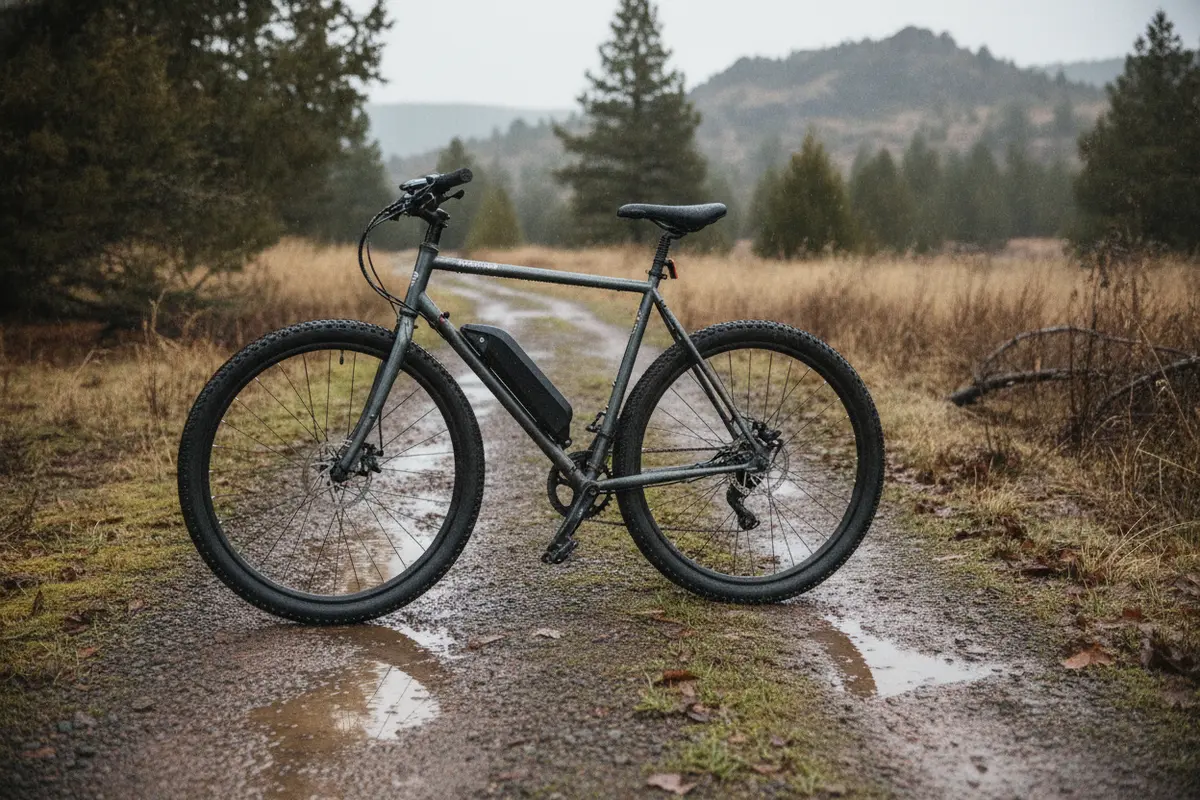
What does water resistance mean for an electric bike?
Water resistance means a component is built to resist limited water exposure under defined conditions; it does not promise protection in every storm or immersion. A manufacturer rating, when provided, should be read with the product manual. Look for the conditions covered, which component the rating applies to, and whether the guidance excludes submersion, high-pressure spray, or charging while wet.
Do not turn a rating into a universal claim. A sealed battery case may resist rain while a display, USB port, or connector needs extra care. If a manual is unclear, treat the bike conservatively: avoid standing water, keep the charging area dry, and ask a qualified technician before using it in severe weather.
When comparing models, ask four practical questions. First, which parts are covered by the stated protection? Second, can the charging port be closed securely when the bike is moving? Third, what does the manufacturer say about cleaning and storage? Fourth, does warranty guidance exclude water damage or immersion? These questions are more useful than a general label such as “weatherproof.” Keep a copy of the manual, because the correct procedure for one e-bike may not be correct for another.
How should you ride an e-bike in rain?
Wet weather changes the ride even when the electrical system remains protected. Water reduces tire grip and can make painted lines, leaves, metal covers, and smooth pavement slippery. Brakes may feel less immediate at first, especially if the rims or rotors are wet. Leave more space, reduce speed before turns, and use both brakes smoothly rather than grabbing one lever.
- Check tire pressure, tread, lights, and brake operation before leaving.
- Use a lower assist level when traction is uncertain.
- Keep both hands on the controls and avoid sudden steering inputs.
- Give vehicles and pedestrians more stopping distance.
- Choose routes with less standing water and avoid flooded paths.
- After the ride, wipe the frame, controls, battery area, and connectors with a clean, soft cloth.
Start braking earlier than you would on a dry road. On a descent, moderate your speed before the turn instead of braking hard while leaned over. Avoid painted arrows, steel plates, wet leaves, and dark patches whose depth you cannot judge. If the bike has assist settings, a lower level can make acceleration easier to control on slick pavement. Sudden motor assistance at low traction can cause the rear wheel to slip.
Fenders can reduce spray reaching the rider and frame. If your bike needs more wet-weather coverage, compare fit carefully before buying a bicycle fender or another model approved for your setup. A fender does not make an e-bike waterproof, but it can reduce the amount of road water reaching components. Check tire clearance, mounting points, and whether the fender interferes with cables or suspension movement.
Government e-bike guidance notes that weather, temperature, wind, and terrain can affect riding conditions and travel performance. Review the Rhode Island e-bike overview for a useful reminder that conditions matter alongside the bike's specifications. The same basic idea applies to a Central Oregon commute, a paved path, or a recreational ride: the machine's limits and the day's conditions both matter.
What should you do with the battery after a wet ride?
Turn the bike off before inspecting it. If the battery is removable and the manual permits removal, take it out in a dry area and inspect the contacts and housing. Do not scrape moisture from connectors with metal tools. Let damp surfaces dry naturally, away from direct heat, before reinstalling or charging.
Use a simple inspection sequence. Look for droplets around the battery mount, moisture beneath a protective cover, dirt packed around a seal, and water near the display or handlebar controls. Wipe accessible surfaces without forcing a cloth into a connector. If the battery does not remove easily, do not pry it out. Follow the model's instructions or ask for service.
Keep water from entering the charging port. Close its cover if the bike has one, but do not rely on a cover that is dirty, loose, or damaged. Never plug in a charger when the port, battery terminals, charger plug, or surrounding surface is wet. Charging should happen in a dry, ventilated location using the manufacturer's charger and instructions. If you need a replacement or backup unit, confirm compatibility before using a compatible e-bike charger.
Do not speed up drying with a heat gun, hair dryer on high heat, oven, radiator, or other direct heat source. Excessive heat can damage plastics, seals, wiring, and the battery. Give the bike time to dry in a clean, sheltered area. If water may have entered the battery enclosure, charging port, or controller, professional inspection is safer than testing the bike repeatedly.
Stop using the battery and seek qualified service if you notice swelling, an unusual odor, excessive heat, popping sounds, smoke, or a change in color. These are recognized warning signs in this lithium-ion battery safety guidance. Move away from a concerning battery and follow local emergency guidance rather than attempting a repair yourself.
Can you wash an electric bike after riding in rain?
Yes, but cleaning should be gentle. Switch the bike off, remove the battery only as directed by the manual, and keep the charging port closed. Use a damp cloth or a low-pressure rinse when the manufacturer allows it. Keep a hose nozzle, pressure washer, and strong spray away from the motor, bearings, displays, switches, seals, and connectors. Pressure can drive water past seals instead of simply removing dirt.
Clean from the top down and use separate cloths for the drivetrain and electrical areas. Do not aim water at a gap because it looks dirty. For mud on the frame, loosen it with a damp cloth rather than blasting it away. If grit has collected near a seal, wipe around the area carefully and inspect for damage. A clean charging-port cover is easier to close securely than one packed with dust.
Dry the bike with a soft towel and allow hidden areas to air-dry. Pay attention to the underside of the frame, around the battery mount, and near cable connections. A bicycle-safe lubricant may help appropriate mechanical parts after cleaning, but never spray lubricant into electrical connectors or onto brake rotors. For maintenance supplies, see the e-bike all-weather lube listing and follow its directions.
Brake rotors and pads need special care. Oil or general-purpose spray on a rotor can reduce braking performance. If a cleaner is appropriate, use only a product and procedure approved for bicycle braking components. After cleaning, test the brakes at walking speed in a safe area before returning to normal riding. A squeal, rubbing sound, weak lever, or pulsing feel is a reason to arrange service.
How should you store and charge an e-bike in wet weather?
Store the bike under cover in a dry place with airflow. Avoid leaving it outside under a wet cover, where trapped moisture can remain against the frame and components. If the bike arrives home wet, wipe it down and let it dry before covering it. A breathable indoor storage area is preferable to a damp shed or a sealed vehicle compartment.
Keep the battery and charger away from rain, condensation, heaters, and direct sun. Before charging, inspect the cable, plug, port, and battery case. If any part is wet, dirty, cracked, or damaged, wait and get guidance rather than improvising. Once charging is complete, disconnect according to the manufacturer's instructions and store the charger in a dry location.
Storage also affects the next ride. Do not place a wet bike where dripping water can run into a power strip, charger, or outlet. Keep the charger off the floor if the area could become damp. When transporting a wet bike inside a vehicle, protect the vehicle without wrapping the bike so tightly that moisture stays trapped. Remove the cover when you arrive and finish drying the bike in a ventilated location.
| Situation | Safer response | What to avoid |
|---|---|---|
| Light rain during a planned ride | Check the manual, ride cautiously, and dry the bike afterward | Assuming every e-bike has the same protection |
| Wet charging port or charger | Wait until all parts are clean and completely dry | Plugging in while damp |
| Heavy rain or standing water | Postpone the ride or choose a sheltered route | Immersion, flooding, or riding through deep puddles |
| Dirty bike after rain | Use a soft cloth and low-pressure cleaning method approved by the manual | Pressure washing electrical components |
| Battery warning signs | Stop use and contact qualified service or emergency support as appropriate | Opening, puncturing, heating, or modifying the battery |
What should you check after a puddle or sudden downpour?
Move to a dry place and turn the bike off. Do not immediately resume riding just because the display is still lit. Check whether water reached the battery area, charging port, display, throttle, and cable connections. Wipe visible moisture and look for a loose cover or damaged seal. If water was deep enough to reach the motor, axle, or battery enclosure, treat the event as more serious than ordinary rain.
Pay attention during the next inspection and ride. Delayed power, a display that flickers or fogs, a charger that behaves differently, unusual motor noise, or a brake that feels weak can all justify professional help. Intermittent problems are especially important because moisture may move as the bike warms or vibrates. Avoid repeated power cycling as a way to “test” a bike that may have water inside.
When should a wet e-bike receive professional service?
Arrange an inspection if the bike was submerged, stopped working after rain, shows intermittent power, has a fogged display, or develops corrosion around connectors. Brake problems also deserve prompt attention. A wet ride can expose a mechanical issue that is unrelated to electronics, such as contaminated brake surfaces, loose hardware, or a tire with inadequate tread.
Bring useful information to the technician. Note how long the bike was wet, whether it went through standing water, whether it was charging at the time, and what changed afterward. Photographing a damaged connector or cover can help, but do not disassemble a battery to obtain a closer look. Keep the charger with the bike if charging behavior is part of the problem.
Do not open a battery pack or bypass a safety system to diagnose water damage. A qualified technician can check connectors, wiring, the charging system, brakes, and other affected components. Voltaire Cycles of Central Oregon provides multi-brand service and repairs, so local riders can request guidance before a small moisture issue becomes a larger repair.
What should shoppers check before choosing an e-bike for wet conditions?
Ask specific questions instead of accepting a broad waterproof claim. Request the manual or product documentation and ask which parts have a water-resistance rating. Confirm how the charging port is protected, whether the battery can be removed, and what the manufacturer says about rain, cleaning, storage, and warranty coverage.
Also evaluate the non-electrical parts that affect wet riding. Reliable brakes, suitable tires, practical fenders, visible lighting, and a stable riding position matter when roads are slick. A hands-on test ride at a Bend showroom can help you compare control layout and fit. If you transport the bike to a trail or covered route, check the vehicle's load limits and compare a rack option for electric bikes before traveling.
Use the intended ride as your comparison test. A commuter may prioritize fender clearance, easy charging access, and predictable control on paved roads. A recreational rider may need to consider mud, trail spray, and how the bike will be cleaned after use. A shopper seeking accessibility may value a stable mounting position and easy battery handling. There is no single wet-weather setup for every rider, so explain your route and storage conditions before choosing a model.
Voltaire Cycles serves Central Oregon riders and ships electric mobility products beyond the area. Online shoppers can ask for product guidance before ordering, while local customers can use the showroom for hands-on evaluation and consultation.
Talk with a Bend e-bike specialist
Frequently Asked Questions
Can I leave my electric bike in the rain?
It is better to store an e-bike under cover in a dry, ventilated place. If it gets caught in rain, wipe it down and let it dry before covering or charging it. Extended outdoor exposure can increase the chance of corrosion and moisture reaching vulnerable components.
Can I charge an electric bike after it gets wet?
Only charge it after the charging port, battery contacts, charger plug, and surrounding surfaces are completely dry. Use the manufacturer's charger and instructions. If the battery is swollen, unusually hot, damaged, or producing an odor, stop using it and seek qualified help.
Is an electric bike waterproof?
Do not assume that any electric bike is waterproof. Many can tolerate some rain, but protection varies by model and component. Check the manual for the manufacturer's limits, and avoid immersion, flooding, pressure washing, and charging in wet conditions.
Can I ride an e-bike through a puddle?
A shallow splash may be within normal use for some models, but deep or fast-moving water is risky. Avoid puddles when you cannot see their depth. Water can affect traction, braking, bearings, connectors, and the battery area even when the motor keeps running.
What is the safest way to clean an electric bike?
Turn it off, protect the charging port, and use a soft cloth or another method approved by the manual. Keep high-pressure spray away from electrical and bearing areas. Dry the bike fully and inspect it before storage or charging.
With the right expectations and a simple dry-before-charging routine, many riders can enjoy an electric bike through ordinary wet-weather conditions while protecting the battery and electronics.