
What Electric Dirt Bike Has the Longest Range?
What electric dirt bike has the longest range? There is no dependable one-model answer without comparing the test conditions behind each range claim. A bike that travels far on level ground at a steady pace may cover much less on steep, loose trails. The useful question is which electric dirt bike can meet your route, riding style, and charging plan.
Call for a free electric mobility consultation
What electric dirt bike has the longest range in real riding?
The longest-range choice is the model with enough usable battery energy for your actual route and a sensible reserve, not necessarily the one with the biggest advertised number. Compare published specifications only when you know how they were measured. If conditions are missing, treat the figure as a starting point and ask the seller or manufacturer what to expect for your terrain and pace.
Electric dirt bike range is not a fixed distance. It is an estimate shaped by the bike, rider, route, and conditions. Two people can ride the same model and finish with different battery levels. Even one rider may see different results on a flowing, firm track and a steep route with repeated acceleration.
That is why a simple “longest range” ranking can mislead. A model may lead a controlled test but not suit your trip, skill level, or access to charging. Before comparing bikes, write down your longest likely ride, the terrain, and whether you can recharge at the start or along the way. Those details make a range estimate useful.
How should you compare electric dirt bike range claims?
Compare battery energy, test conditions, and the type of riding the estimate represents. Look for watt-hours (Wh) when listed, then ask whether a published distance came from a controlled test or an estimate. Use the same assumptions for each candidate and plan a reserve instead of treating the highest advertised number as a guarantee.
Start by finding the battery capacity in watt-hours. If a specification lists voltage and amp-hours instead, multiplying those values gives a nominal watt-hour figure: volts × amp-hours = watt-hours. This is a way to compare listed energy, not a promise of distance. Different battery systems, control settings, and usable capacity can make two equal Wh figures behave differently.
Then find out how the range claim was produced. Was it measured at a steady pace on flat ground, or estimated for mixed riding? What rider weight, speed, temperature, terrain, and assist or power mode were used? If those details are not published, ask before treating the number as comparable with another brand's claim.
- Check the unit. Do not confuse battery capacity in Wh with a distance claim in miles or kilometers.
- Compare like with like. Similar speeds, terrain, payload, and riding mode make two estimates more useful to compare.
- Ask what “range” means. Find out whether the figure is a measured result, an estimate, or a best-case figure.
- Plan a reserve. Do not plan to reach a remote trailhead or return home with the battery nearly empty.
Published specifications are best used to narrow a list, not predict the exact end of a ride. If you cannot find test details, record that uncertainty alongside the number. A clear answer from a manufacturer about assumptions is more valuable than a precise-looking figure with no explanation.
What conditions change an electric dirt bike's range most?
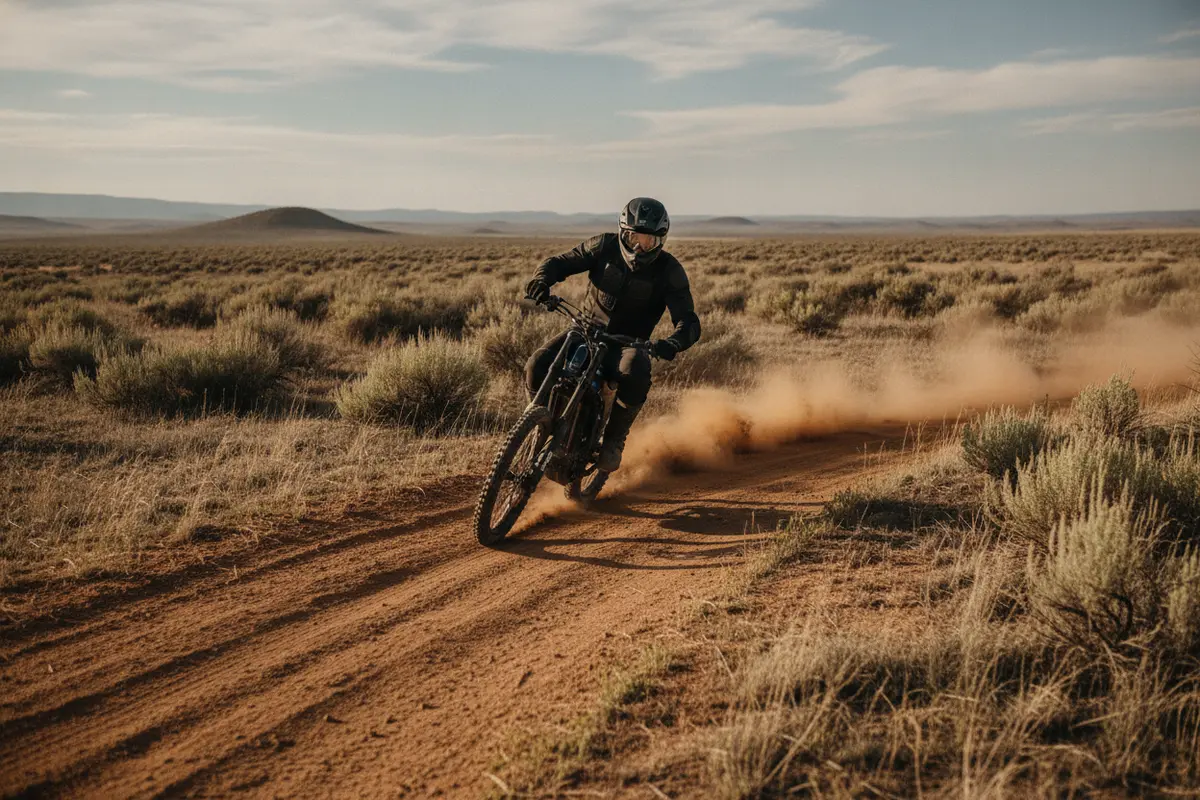
Terrain, speed, repeated acceleration, rider and gear load, temperature, tire setup, and riding mode all affect energy use. A long climb or soft surface can draw more power than a smooth route at a steady pace. Since these factors combine, there is no single adjustment that reliably converts a manufacturer’s range figure into your exact mileage.
Terrain and elevation: Climbing asks the motor to do more work than riding a similar distance on flatter ground. Loose soil, sand, mud, and deep ruts can also demand more effort than a firm surface. A route that climbs out and descends back may not cancel out neatly: the bike still spends energy climbing, and downhill recovery, if any, depends on the system.
Speed and riding style: Higher sustained speed and hard acceleration can use energy quickly. Repeated starts, stops, and bursts of throttle may produce a different result from smooth riding. If you want a longer ride, consider a controlled pace and avoid unnecessary bursts where trail conditions allow. This is not a reason to ride below a safe speed or beyond your skill.
Load and equipment: Rider weight, protective gear, carried tools, and other cargo contribute to the total load. Tire pressure and tire choice matter too; follow the bike maker's guidance rather than changing pressure based on a generic range tip. Keep the bike maintained, since poor mechanical condition can affect how it rides and uses energy.
Temperature and battery condition: Battery behavior can vary with temperature, age, storage, and condition. Follow the instructions supplied with the specific battery for charging and storage. If the battery behaves unusually, is damaged, or has been exposed to an impact, stop using it and ask a qualified service provider for advice. The U.S. Consumer Product Safety Commission is a place to look for consumer product safety information and recall resources.
Power settings: A bike's available power modes can change how quickly energy is used. Check what the selected mode actually controls on the model you are considering. Do not assume an “eco” or low setting will achieve a specific distance, or that a higher setting has the same effect across different bikes.
How can you estimate whether a bike will cover your route?
Start with your longest likely ride, identify its hardest sections, and compare that trip with range information for similar conditions. Ask the manufacturer or retailer to explain the estimate and leave a battery reserve for route changes, slower surfaces, and unexpected delays. If the route is remote, decide on a safe turnaround point before you ride.
- Describe the route. Note total distance, climbing, surface, and any sections where you expect frequent acceleration or slower technical riding.
- Describe the rider and gear. Include your approximate riding load and what you usually carry. You do not need an exact weight calculation to explain your use case.
- Ask about comparable conditions. Share the route and ask whether the published estimate reflects similar terrain and riding. Ask what assumptions are unknown.
- Keep a reserve. Set a conservative turnaround point before the battery gets low. Do not count on finding a compatible charger at a trailhead or remote stop.
- Learn from your own rides. Once you own a bike, record route, conditions, mode, and remaining charge. Your own consistent notes can help you plan better than a generic mileage claim.
For example, a short loop with sustained climbs may be more demanding than a longer loop on firm, level ground. Distance alone does not tell the whole story. When considering a route beyond your usual area, think about how you would return if conditions take more energy than expected. A conservative plan is more useful than trying to calculate an exact mile count from a listing.
Charging access also matters. Confirm the manufacturer's charging instructions, what equipment comes with the bike, and whether the battery is intended to be removed for charging. Never assume that a charger for a different model or battery is compatible. If you are comparing the dirt bike with pedal-assist options, keep those categories separate: a bicycle conversion product such as this electric bike conversion kit is a different kind of setup, not a substitute battery or range specification for an electric dirt bike.
Which other features matter if range is your priority?
Choose a bike for your whole riding plan, not just the distance claim. Battery capacity matters, but fit, handling, intended use, charging logistics, service support, and the route itself determine whether a bike is a practical match. A slightly lower published range may be the better choice if the bike fits your needs and you can support it locally.
Confirm the bike's intended use and local access rules before planning a route. Electric dirt bikes are not automatically permitted wherever a pedal-assist bicycle is allowed. Check current land-manager guidance for the exact trail or riding area, and follow posted restrictions. Range planning cannot make an unsuitable route appropriate.
Consider how the bike will get to the ride. A carrier must be rated for the bike's weight and frame dimensions, and the vehicle must be able to support the load. The shop's hitch rack listing is an example of a transport product, but do not assume a particular rack can carry your chosen dirt bike: check its current specifications and confirm compatibility with both the bike and vehicle before purchase.
Also ask where maintenance and service can be handled. Electric models combine mechanical components with electrical systems, so find out who can inspect the model, diagnose issues, and advise on its battery. Voltaire Cycles of Central Oregon offers electric mobility sales and service support in Bend, and a consultation can help you identify questions to take to the manufacturer. For broader context on electric bicycles and battery systems, see this electric bicycle battery listing; it is a separate product and does not establish compatibility with a dirt bike.
Segway's Xaber 300 is one model Voltaire Cycles covers in its review content, but this article does not assign it a range ranking or unverified distance. Ask for current manufacturer specifications and test assumptions for any model you are considering, including the Xaber 300. Current product details and availability can change, so verify them directly before making a purchase decision.
How do you choose an electric dirt bike for long rides?
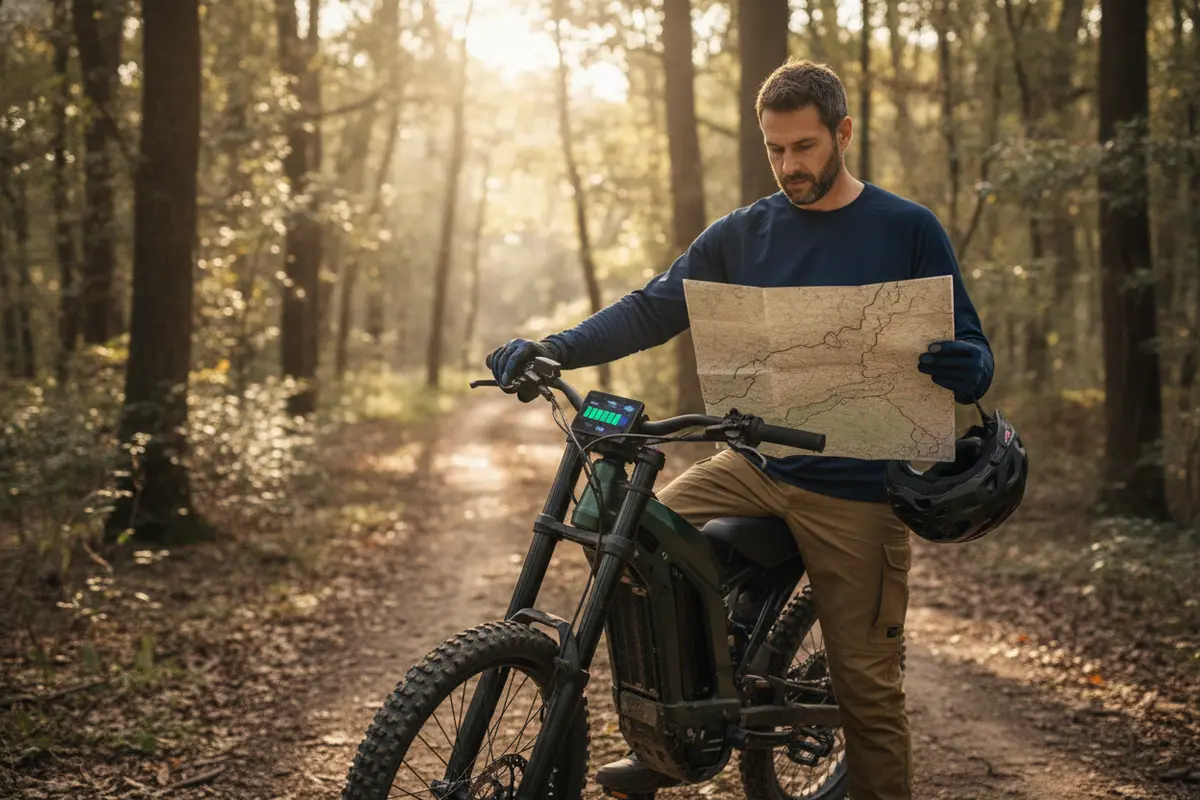
Choose by matching documented range information to your typical route, then confirm the battery and support details before buying. If range evidence is incomplete, ask specific questions rather than assuming the advertised figure will apply. A local conversation or hands-on evaluation can help clarify fit and practical ownership questions before you decide.
Use this comparison table to organize the information for each bike. Fill in current specifications from the maker or seller rather than relying on remembered figures or online claims without test details.
| What to compare | Question to ask | Why it matters |
|---|---|---|
| Battery capacity | What is the stated capacity in Wh, and what does the maker say is usable? | Provides a common starting point for comparing listed battery energy. |
| Range test | Was the distance measured or estimated, and under what conditions? | Reveals whether two published figures can be meaningfully compared. |
| Route match | How does the estimate relate to my terrain, climbing, speed, and load? | Helps set realistic expectations for your own riding. |
| Charging | Which charger is included, and what charging instructions apply? | Helps you plan charging at home and at trip stops. |
| Service and support | Who can diagnose and service this model and its battery? | Clarifies how you can get help over the life of the bike. |
| Transport and access | Can my vehicle carry the bike, and is the intended route appropriate? | Checks practical logistics beyond the bike's claimed range. |
If you are shopping in Central Oregon, an in-person conversation can help turn those questions into a shortlist. Voltaire Cycles has a Bend showroom for electric mobility products, with hands-on product evaluation and expert consultation. Online shoppers can also ask for guidance before choosing a model. The goal is to match the bike and its support plan to your ride, not to chase a range claim in isolation.
Talk with a Bend electric mobility expert about your route
Frequently asked questions
Can an electric dirt bike's advertised range be guaranteed?
No. Range depends on the rider, terrain, pace, conditions, battery state, and how the estimate was produced. Treat a published number as a comparison point, then ask what assumptions support it.
Does a larger battery always mean more riding distance?
More listed watt-hours can indicate more stored energy, but it does not by itself guarantee a longer ride. The bike's system, usable capacity, route, and riding style also matter. Compare complete specifications and test conditions.
Is electric dirt bike range the same as e-bike range?
No. Dirt bikes and pedal-assist bicycles are different vehicle types and may be tested, powered, and used differently. Do not compare their range numbers as if they came from the same conditions or establish the same trail access.
How much range should I keep in reserve?
There is no universal reserve number that fits every bike and route. Set a conservative turnaround point based on the ride, uncertainty in the range estimate, and available charging. For remote riding, plan for a return without relying on a charger being available.
What should I ask before buying a long-range electric dirt bike?
Ask for battery capacity, range-test assumptions, charging instructions, intended use, service support, and any current limitations. Explain your usual route and riding load so the answer addresses your needs rather than a best-case scenario.
The best range choice is the electric dirt bike whose documented capabilities, charging plan, and service support fit the rides you actually want to take. Compare claims carefully, ask about the conditions behind them, and plan each trip with a safe reserve.