

Torc Sensing Ebike Long Range Electric Bike Guide
Long rides rarely come down to battery size alone. Your assist level, cadence, gear choice, terrain, wind, and how much power you add all influence how far an e-bike can travel between charges. A torque-sensing system helps coordinate those factors by responding to your pedaling effort instead of delivering the same assistance in every situation.
For a torque-sensing e-bike built for long range, choose a battery that fits your route, use only as much assist as you need, and let your own steady pedal input do part of the work. Research on e-bike efficiency found that optimizing assistance and gearing can reduce energy use per mile by up to 19 percent in certain configurations. Although real-world range still varies with rider weight, slope, wind, and rolling resistance.
At Voltaire Cycles in Bend, you can compare Segway models in person and feel how torque sensing changes the ride on Central Oregon terrain. Explore the Segway electric bike collection and plan a hands-on test ride. First, it helps to understand why matching motor support to your effort can make each charge go farther.
Why a Torque-Sensing E-Bike Delivers More Range Per Charge
A torque-sensing system measures how much force you are putting through the pedals and adjusts motor assistance around that effort. Press harder to climb or accelerate, and the motor responds with more support. Ease off on level ground or while coasting, and it reduces output. The result is assistance that feels connected to your riding rather than a simple on-off response.
That distinction matters for range. A cadence-only system may continue delivering a preset level of power as long as the cranks are turning. A torque-sensing system can avoid using more motor power than the moment requires. Research on e-bike motor control describes this adaptive approach as a way to reduce the pedaling torque required from the rider while maintaining a smoother ride and more responsive assistance. The published study also notes that external loads, such as slope, wind, rolling resistance, and rider weight, change the torque required during a ride.
How rider input saves battery energy
Think of the battery as supporting your effort, not replacing it on every section of the route. On a flat stretch, a moderate pedal contribution may be enough for the system to maintain your chosen pace with less motor demand. When the road tilts upward, your stronger input gives the motor useful information about how much help you need. This can prevent unnecessary over-assistance when you are already contributing significant force.
Efficient assistance management can make a measurable difference. One study of a mid-drive electric bicycle found that its proposed strategy reduced energy consumption per unit of distance by up to 19 percent under the tested conditions. While also reducing speed by 11.3 percent. That result is not a promised range increase for every rider or model. It does show why assist settings, rider effort, and drivetrain operation should be considered together when evaluating a long-range electric bike.
Natural power also makes efficient riding easier
The range benefit is practical because natural assistance is easier to manage. You can select a lower support level on smooth, flat sections and add help when fatigue, a hill, or a headwind makes more power worthwhile. With a mid-drive design, choosing an appropriate gear can help the motor operate efficiently alongside your pedaling. The best result comes from matching assistance and gearing to the terrain instead of leaving the motor at its highest setting for the entire trip.
For a closer look at how sensor behavior affects ride feel and battery use, read our guide to the best torque-sensing e-bikes for 2026. A test ride is equally useful: you can feel how smoothly a system responds when you start, climb, slow down, and resume pedaling.
How Battery Size Sets Your Real-World Range Ceiling
Battery capacity is the first practical limit on how far an electric bike can travel between charges. It is usually expressed in watt-hours (Wh), a measure that combines voltage and amp-hours. In simple terms, a larger watt-hour rating gives the motor more stored energy to draw from, but it does not guarantee a specific number of miles. Rider weight, hills, wind, tire pressure, temperature, assist level, and riding speed all change the result.
Battery type matters as well. Different battery systems can deliver energy differently under load, and the battery's age and condition influence how much usable capacity remains. That is why range estimates on a product page should be treated as a starting point, not a promise. Voltaire Cycles staff can compare battery size and type with your normal route, terrain, and riding habits before you choose a bike.

What watt-hours tell you about range
Watt-hours help you compare the energy capacity of two batteries, but the bike's efficiency determines how quickly that energy is used. A torque-sensing system responds to how firmly you pedal. So it can provide more assistance when you need it and avoid unnecessary motor output when your own effort is already carrying the bike. That can make the available battery capacity go further in ordinary riding, especially when you vary your effort and assist level instead of using maximum power continuously.
For a commuter such as the Segway Myon, the right battery choice may depend on daily distance, charging access, and whether the ride includes sustained climbs. A recreational rider may value extra capacity for longer outings or changing conditions. The useful question is not simply, "What is the biggest battery?" It is, "What capacity gives me a comfortable margin for my actual route?"
Charging from a standard household plug
Most riders can recharge an e-bike battery from a standard household plug, which makes overnight charging practical for many homes and workplaces. Build a routine around your next ride rather than waiting until the battery is nearly empty. Batteries also have a finite lifespan, so proper charging habits, storage, and regular service matter over the years. If you are comparing a long-range electric bike with a torque-sensing system, bring your typical route to a Voltaire Cycles consultation in Bend. The team can help match capacity, charging convenience, and expected use without overstating the mileage you should expect.
How Riding Modes and Assist Levels Stretch Your Range
The biggest range lever you control while riding is not a marketing number on a product page. It is how much assistance you ask for, how consistently you pedal, and whether your gearing lets the motor work efficiently. A low or moderate setting can preserve battery on level ground, while a higher setting has a useful place on steep climbs. Into a strong wind, or when fatigue would otherwise slow you dramatically.
Think of assist as a partner, not a replacement for your effort. On a torque-sensing e-bike, the motor responds to how firmly you press the pedals. That makes it easier to use only the power you need instead of delivering the same level of help regardless of your input. Research on mid-drive e-bikes found that selecting the assistance level together with the transmission gear ratio is central to maximizing range. In one modeled configuration, the strategy reduced energy consumption per distance by up to 19%, although results vary with the bike, rider, speed, and conditions.
| Assist mode | Best use | Typical range effect |
|---|---|---|
| Low | Flat routes, gentle grades, and riders comfortable contributing steady effort. | Uses the least battery and generally supports the longest rides. |
| Mid | Daily commuting, rolling terrain, and a balanced pace. | Offers a practical balance between rider effort, speed, and range. |
| High | Steep climbs, headwinds, heavy loads, or times when extra support matters. | Consumes battery faster, so reserve it for demanding sections. |
Cadence matters too. Shift early enough to keep your legs turning comfortably rather than forcing a slow, heavy gear up a hill. A steady cadence paired with moderate assistance usually gives the system more useful input than repeated bursts of high power. On a long ride, save the highest setting for the sections where it changes the experience, then return to a lower level when the road eases.
For a closer look at how the system responds to your effort, read about automatic power adjustment on torque-sensing e-bikes. The right setting is personal, so a test ride can help you compare modes and find a comfortable balance before committing to a long-range electric bike.
How Terrain and Rider Input Shape the Range You Actually Get
Published range estimates are useful for comparing electric bikes, but they are not a promise for every ride. The same battery can deliver very different results depending on who is riding, where the bike is traveling, and how much work the motor must do. Rider weight, cargo, wind, tire pressure, road surface, slope, and speed all change the load placed on the system.
Research on e-bike propulsion identifies rider weight, wind resistance, rolling resistance, and road slope as important influences on cycling torque and energy demand. This study of adaptive e-bike motor control also helps explain why torque sensing is valuable: the motor can respond to changing external loads instead of delivering the same assistance regardless of conditions.
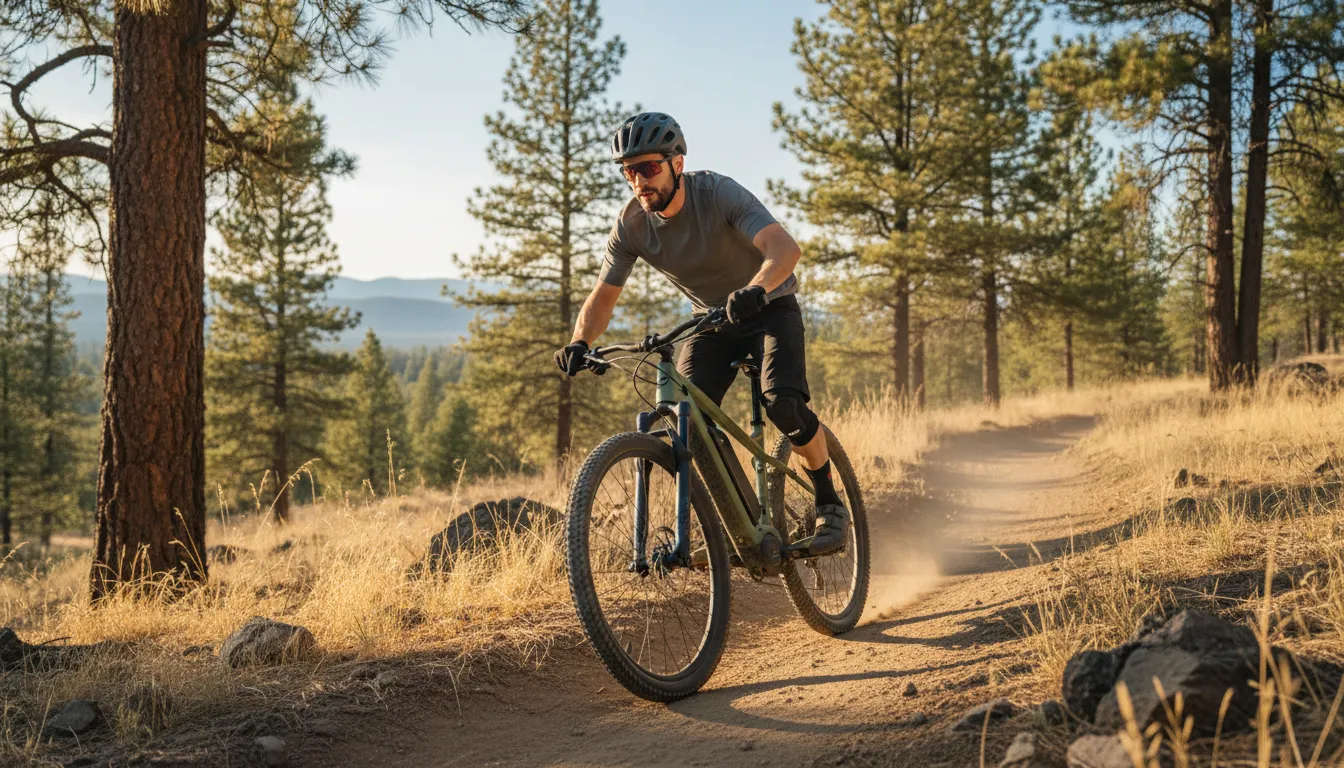
Climbing, wind, and rolling resistance
Climbing is one of the clearest range variables. A modest incline may feel manageable on a flat-road commute, then require substantially more motor support on a longer climb. Headwinds create a similar effect because the bike and rider must push through more air. Loose gravel, soft ground, rough pavement, and underinflated tires increase rolling resistance, while properly inflated tires and a sensible pace help reduce avoidable energy loss.
That does not mean you need to avoid hills or ride cautiously everywhere. It means range planning should reflect your normal route. If your regular rides include Central Oregon climbs, trail surfaces, or exposed stretches with strong wind. Compare bikes and battery systems against those conditions rather than relying only on a best-case number.
Payload, speed, and the rider's contribution
Payload includes the rider, clothing, a lock, water, and any cargo carried on the bike. E-bike payload capacities vary by model, so check the manufacturer's specification before assuming a bike is suitable for a heavy load or a utility-focused commute. Speed matters as well. Models may have different maximum speed ratings, and riding faster generally increases aerodynamic demand.
Your input still matters on a torque-sensing system. Pressing harder on the pedals asks for more assistance, while a lighter effort can draw less power when conditions allow. Torque control research describes methods intended to improve dynamic response while limiting abrupt changes in acceleration. Which is especially useful when a route shifts from smooth pavement to a slope or uneven surface. You can explore all electric bikes we carry and compare the fit, intended use, and specifications that match your routes.
For a realistic estimate, bring your typical route and cargo list to a Voltaire Cycles consultation in Bend. A test ride can reveal how a bike responds to your cadence, hills, and preferred assist level before you commit to a range figure on paper.
Long-Range Segway E-Bikes at Voltaire Cycles, Tested in Bend
Choosing a long-range electric bike is easier when you can evaluate more than a specification sheet. At Voltaire Cycles, Segway is a primary product focus, with options suited to different riding goals, including the commuter-oriented Segway Myon and the Segway Xaber 300. You can explore the Segway electric bike collection online, then talk with the team about how a model fits your routes, terrain, and daily riding habits.
The Segway Myon is a practical starting point for riders who want an electric bike for commuting and everyday transportation. A commuter may value a predictable, comfortable ride and efficient use of assistance across repeated trips. The Xaber 300 offers a different direction for riders interested in a more adventurous Segway platform. The right choice depends on how you plan to ride, not simply on which model appears to have the largest claimed range.
Range is shaped by rider weight, wind, rolling resistance, slope, motor output, and the amount of work you contribute through the pedals. Torque-sensing control can help the motor respond to that input instead of supplying unnecessary power when you are already pedaling firmly. That can make assistance feel more natural while helping you use the battery thoughtfully. Real-world range will still vary with conditions, so a test ride is more useful than treating any single number as a guarantee.
A hands-on ride at the Bend showroom lets you compare fit, starting behavior, steering, braking, and how the assistance responds when your effort changes. You can also explain your typical route, expected cargo, and preferred pace to a local specialist. Voltaire Cycles provides local service and technical support, which matters when you are investing in an electric bike that you expect to use regularly in Central Oregon.
For a closer look at the Myon and other Segway options, read the Segway electric bike comparison. Then visit Voltaire Cycles in Bend for a test ride and an expert conversation about long-range riding, or shop online if you are outside Central Oregon.
Frequently Asked Questions
Does a torque sensor make an electric bike feel more natural?
Yes. A torque sensor responds to how firmly you pedal, so motor support rises when you push harder and eases when your effort eases. That produces a smoother, more predictable feel than simple on-off assistance, especially when speed, slope, or traffic conditions change.
How much range can I expect from a long-range torque-sensing e-bike?
There is no single dependable mileage number. Battery size, motor output, rider weight, wind, rolling resistance, road slope, tire pressure, assist level, and your own pedaling all affect range. Treat advertised range as a reference, then compare the bike's battery and your usual route before choosing a model.
What is the best electric bike with a torque sensor for long-range riding?
The best choice depends on whether you prioritize commuting, hills, cargo, trail use, or easy charging. Voltaire Cycles focuses on Segway models, including the commuter-oriented Segway Myon. A Bend showroom test ride and range-focused consultation can help match battery capacity, riding position, and assistance to your route.
How do I maintain the torque sensor on my electric bike?
Keep the drivetrain, crank area, electrical connections, and tires in good condition, and address unusual power changes or inconsistent assistance promptly. Periodic professional service also helps protect efficient operation. Voltaire Cycles provides local electric-mobility service and can check the system when routine care is not enough.
Ready to Find Your Long-Range Segway E-Bike?
The right torque-sensing e-bike should match how you ride, where you ride, and how much support you want from each charge. A hands-on test ride can make those differences easier to understand before you choose. Visit the Voltaire Cycles Bend showroom to compare long-range Segway options, or shop the Segway electric bike collection online. You can also contact the team through the collection page to discuss your next ride.
Plan your Bend test ride or shop long-range Segway e-bikes online today.