

Torc Sensing Ebike for Heavy Riders: A Full Guide
A standard electric bike motor can lag or sputter when trying to move a three-hundred-pound payload uphill. This delay leaves riders feeling unstable and stranded on steep inclines. Heavier cyclists need a drive system that matches their physical effort with smooth, instant support.
A torc sensing ebike for heavy riders is ideal because it delivers electric motor power based on pedal pressure instead of pedal speed. This responsive system provides high assistance immediately on startup, giving heavier riders the stability and confidence they need to start from a stop. By matching your physical effort, the sensor reduces physical strain on your legs and prevents excessive wear on the bike's drivetrain components. These smart systems also make climbing steep hills much smoother and more efficient by dynamically adjusting to the total weight load. You can explore all electric bikes at Voltaire Cycles in Bend, where our local experts will help you find a durable model.
Schedule a free e-bike consultation or test ride at our Bend showroom today.
If you are wondering why this technology matters so much for heavier cyclists, keep reading. Below we break down what a torque-sensing drive does, how much weight these e-bikes can support. And how Segway models at Voltaire Cycles of Central Oregon deliver the power and comfort you need.
Why Is Torque Sensing the Right Choice for Heavy Riders?
When you choose an electric bike, how the motor gives you power changes how the ride feels. For a heavier rider, this system is vital for safety and control. A torque-sensing system measures your real effort to help you ride. If you want a natural riding feel, this sensor is the best choice because it tracks your own foot pressure.
Cadence vs torque sensors
Basic e-bikes use cadence sensors that only track how fast you spin the pedals. Since they do not track how hard you push, they can feel jerky. In contrast, torque sensors measure your foot pressure to give you a smooth, natural boost. The table below compares how these two systems handle common riding tasks.
| Riding Aspect | Torque Sensor | Cadence Sensor |
|---|---|---|
| What it detects | Pedal pressure (how hard you press) | Pedal speed (how fast you spin) |
| Response time | Instant (matches your effort) | Delayed (takes 1-2 pedal turns) |
| Hill climbs | Smooth and highly efficient | Slow to start on steep slopes |
| Startup from stop | Immediate help on first push | Delayed help until wheels move |
| Heavy rider benefit | Less strain on motor and gears | More wear on drivetrain parts |
Instant start and hill climbs
Starting from a stop is much simpler with a torque sensor. A cadence sensor needs you to turn the pedals before the motor starts, which can make it hard to stay balanced. In contrast, a torque-sensing bike gives you help the instant your foot presses down. It tracks your start force and feeds power to the wheels right away.
These benefits are also clear when climbing hills. Torque systems handle steep slopes by instantly changing motor power based on your pedal pressure. A study on motor control shows that smart systems adjust motor help by tracking road slope and rider weight. If you want to explore the best torque-sensing e-bikes, you will see how they make tough climbs much easier.
Better durability for your bike
A torque sensor also protects your bike from wear, which is a major factor under heavier loads. Because this system feeds power in a smooth, gradual way, it avoids sudden jerks on gears and chains. This reduces strain on the motor and helps your drivetrain last longer. Choosing this system means fewer trips to the shop and more time on the road.
How Much Weight Can a Torque-Sensing E-Bike Support?
When you shop for a new ride, you must know how much load it can carry. Electric bike weight limits vary by model, but many e-bikes designed for heavy riders support a total payload of 300 to 400 lbs or more. This limit includes the weight of the rider, the bike, and any gear you pack.
Weight Limits and Payload Capacity
Most standard e-bikes are built to carry about 220 to 275 lbs. But if you want a torc sensing ebike for heavy riders, you need a model built for more weight. High-capacity frames can hold 300 to 400 lbs safely. When you browse all electric bikes at Voltaire Cycles, you can find heavy-duty options made to handle these large loads.
The Importance of Frame Rigidity
When choosing an e-bike, heavy riders should consider frame rigidity and overall weight capacity. These structural factors are as critical as the motor's torque output. A weak frame will flex under a heavy load, which makes the bike feel unstable. Strong frames use thick tubes and reinforced joints to keep you safe and in control on the road.
How Torque Sensors Manage Heavier Loads
Torque sensors are great at handling high-stress loads. They measure how hard you push the pedals and tell the motor to help right away. Studies show that smart systems look at rider weight, wind, and road slope to help the motor react. You can read about these tests in this academic study on e-bike torque. This smart aid makes your ride feel smooth. To find the right match, you can read about the best torque-sensing e-bikes for your daily needs.
Motor Power and Torque Delivery for Heavier Riders
When shopping for a torc sensing ebike for heavy riders, understanding motor power and torque delivery is key. Power in watts tells you how fast the bike can run, but torque measures turning force. For heavier cyclists, torque is the number that matters most for starting and climbing hills.
Understanding Motor Watts and Torque
Most electric bikes have motors rated between 250 and 750 watts. While high wattage helps maintain top speeds, torque measures the raw twisting force of the motor in Newton-meters (Nm). A high torque output helps a bike move a larger load from a dead stop. This force is vital on steep trails where the motor must work harder to keep moving.
Adaptive Control for Varied Loads
Adaptive motor systems help manage the extra weight of a rider. Research shows that motor torque can be adaptively controlled based on road slope and rider weight (PubMed, 2023). By tracking wheel acceleration, the system matches your pedal effort with motor power. This dynamic response makes the ride feel smooth even when carrying a heavy load on steep slopes.
The Segway Lineup for Central Oregon
If you want to test these features, the Segway Xafari is a great choice. This model has a strong 750-watt motor that yields 80 Nm of torque. It also has a large 936-watt-hour battery that offers a max range of about 88 miles. For a different style, you can check out the Segway Xyber in our showroom.
Both bikes are part of the premier Segway e-bike collection. These models use smart sensors to track your pedal force. They adjust power on the fly, so you do not have to struggle on hills. Our team in Bend can help you find the best model for your weight and riding style.
Is a Mid-Drive Motor Necessary for Heavier Riders?
When you ride an electric bike, the motor style is a big deal. For heavy riders, a mid-drive motor is often the best choice. This motor connects to the chain to use your gears, so shifting to a low gear gives you instant climbing power.
How gears help on steep hills
A mid-drive system is great at handling heavy loads. A study shows that smart motors adjust their power based on cyclist weight and road slope. This smart help keeps the bike running smoothly when you carry extra weight. It stops the motor from getting too hot on the long trails of Central Oregon.
Tackling trails with torque sensors
Finding the best torque-sensing e-bikes for 2026 helps you get the right ride. This is true if you want a torc sensing ebike for heavy riders to climb steep trails. With a torque sensor, you can tackle steep terrain with ease. The motor gives you strong help the very split second you push down on the pedal to start moving.
E-bike classes and trail rules
When you choose a bike, you must also look at local trail laws. Class 1 and Class 3 bikes only give help when you pedal, which matches the natural feel of a torque sensor. Class 2 e-bikes have a hand throttle that can run without any pedaling. In Central Oregon, some trails only allow Class 1 e-bikes to keep trail speeds safe.
Range Expectations: How Rider Weight Affects Battery Life
Rider weight and power use
Many people ask how far an electric bike can go on one charge. The truth is that e-bike range is never a fixed number. When you look at torque-sensing e-bike range, rider weight is a key factor. Heavier riders use more power, mainly on hills, which cuts your total distance per charge. This happens because the motor must work harder to move more weight up a slope.
Battery size and the Segway Xafari
To get the best mileage, you need a large battery. The Segway Xafari comes with a big 936 Wh battery. This massive power pack helps support heavy loads over long paths. But real range always varies with your weight, the hills you climb, and the weather.
How to extend your battery range
Smart e-bikes use advanced sensors to watch how you ride. Studies show that adaptive torque control improves how a bike reacts to external loads like rider weight, road slope, and wind. The system adjusts motor help in real time to keep the bike running smooth and prevent overheating.
You can also set your e-bike to favor lower assist levels to save battery power. This is a great way for heavier riders to get more range on long trips. It lets you pedal with a light touch while keeping the motor from draining the battery too fast. By using less motor help on flat roads, you can save plenty of power for steep climbs.
Comfort, Fit, and Test Rides for Heavy Riders in Bend
When you choose an e-bike, comfort and safety must come first. Our shop recommends wide fat tires for heavy riders to get more support and balance. This helps distribute the total weight of the bike and rider more evenly over the ground. Wide tires also cushion your ride on gravel paths, keeping you in full control. A sturdy frame with a low step-through design makes it much easier to mount and dismount your bike safely.
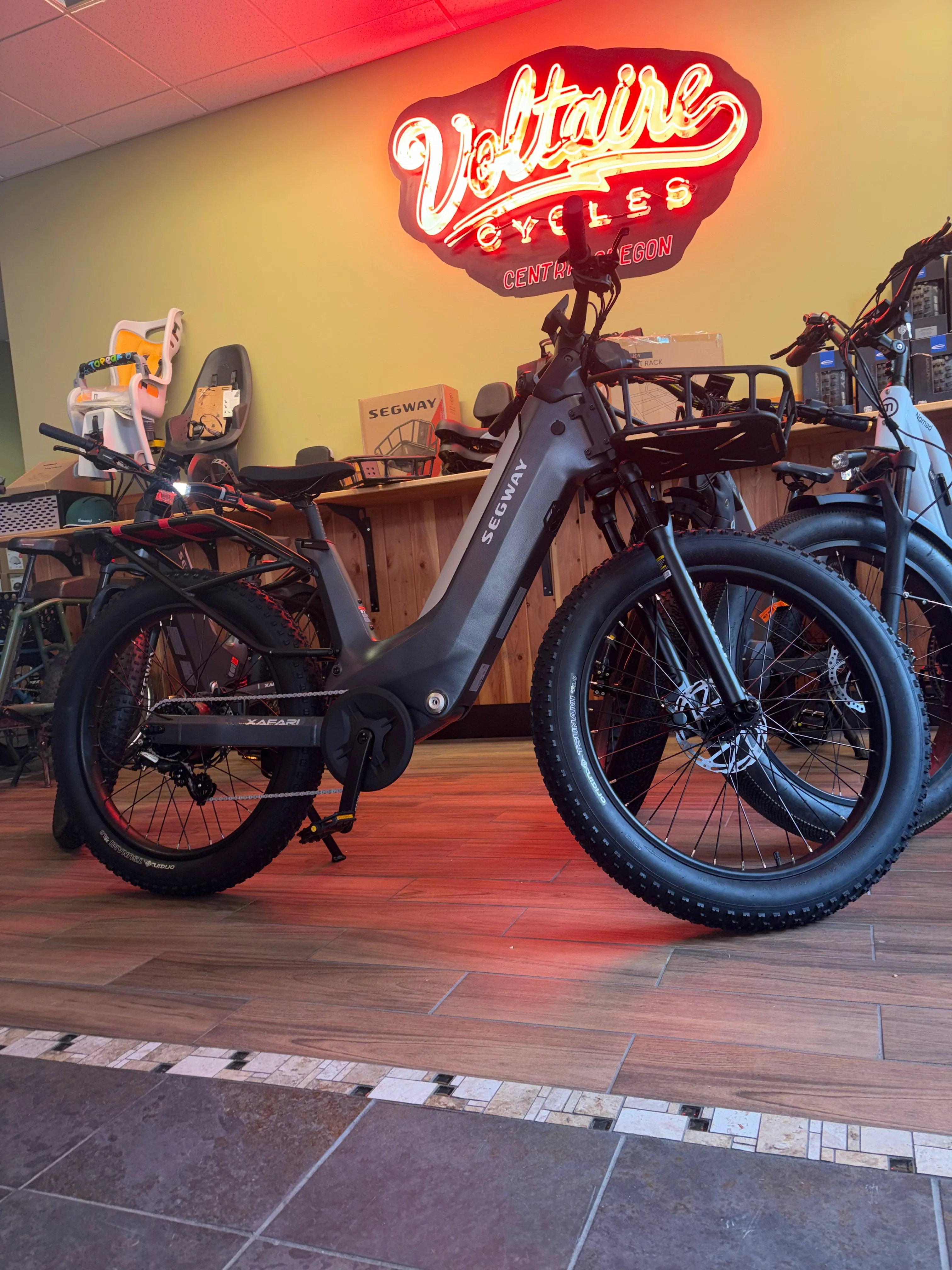
Showroom test rides in Bend
For Bend riders, climbing hills is much easier with torque sensors. The system adjusts in real time to your pedal force while riding local trails. This instant help is vital when you face steep Central Oregon hills, giving you power the moment you push the pedal. Studies in PubMed show that smart motors adapt to rider weight and road slope to deliver the best response. This makes climbing much smoother and saves battery power.
To find the right model, you should try them out in person. Our staff can help you test different models at our local shop. We will help you find the best balance of motor power and battery range for your weight and local trails. Our team can also adjust the seat and handlebar height to get a perfect fit. Visiting our Bend showroom is the best way to compare the best torque-sensing e-bikes for 2026 before you make a choice.
Crucial maintenance for high payloads
Regular service is key when carrying larger loads. Heavy riders should check spoke tension and brake pad wear often due to the increased weight demands. Loose spokes can weaken the wheel, while worn brakes increase your stopping distance. Our team offers certified Voltaire Cycles service and repair to keep your ride running smoothly and safely on every trip. We do full checks to keep your bike in peak shape.
Ready to find your torque-sensing match? Browse the Segway e-bike collection or book a Bend showroom test ride today.
Frequently Asked Questions
Why is a torque-sensing e-bike better for heavy riders?
A torque sensor measures how hard you push the pedals to give you instant motor help. Older sensors only watch how fast the pedals turn. A torque-sensing system responds to your real effort. According to Voltaire Cycles, this gives a smooth and safe ride. It helps you get moving from a dead stop and easily control a larger load.
How much weight can a torque-sensing electric bike support?
Weight limits depend on the specific model you choose. Many electric bikes built for heavy riders can support a total weight of 300 to 400 pounds. Strong frames and rigid builds are just as key as motor power for safety. You can find a sturdy model in the Segway e-bike collection. These models have high weight ratings to keep you safe.
How does rider weight affect e-bike battery range?
A larger load means the motor must work harder, mostly on hills in Central Oregon. This extra work uses more battery power and cuts your total range. To get more miles, you can use a low assist level or pick a bike with a big battery. For example, a heavy-duty model like the Segway Xafari has a massive battery to help you ride far.
Is a mid-drive motor necessary for heavy riders?
A mid-drive motor is not needed, but it is very helpful for heavy loads. Because the motor sits at the pedals, it can use the bike gears to get extra help on steep hills. According to study data on PubMed, smart motor control helps adapt to road slopes and rider weight. A mid-drive setup keeps the motor in its sweet spot so you do not overheat on climbs.
Ready to Find the Best E-Bike for Your Ride?
Waiting to get the right e-bike can keep you from riding the scenic paths of Central Oregon. If you delay, you might miss out on warm days and outdoor fun with family. Choosing the wrong bike can also lead to costly frame repairs, poor fit, and a lack of safety. Finding a strong, durable ride now ensures you can cruise with ease and peace of mind. You will get the exact power you need to tackle steep hills and ride farther without tired legs. Start your search today to secure the perfect model before the sunny season ends.
Ready to book? Contact us online to schedule a free consultation and test ride at the Bend showroom.