

How Fast Do Adult Electric Scooters Go?
How Fast Do Adult Electric Scooters Go?
Adult electric scooters cover a broad performance range, but most everyday models are designed for controlled commuting rather than extreme speed. A practical expectation is about 10 to 20 mph for many commuter scooters, 20 to 30 mph for faster mid-range models, and more for specialized high-performance equipment. The right number depends on your route, comfort, rider weight, hills, wind, battery charge, and local rules.
Browse Segway electric scooters and compare adult ride options
For shoppers in Bend and Central Oregon, a scooter that maintains a predictable pace on your actual roads is usually more useful than one with the highest advertised top speed. This guide explains how to interpret speed claims, what motor wattage tells you, how speed affects range, and how to compare Segway Ninebot options responsibly.
How Fast Do Adult Electric Scooters Go on Typical Routes?
Most adult electric scooters travel about 10 to 20 mph in everyday commuting, while quicker models commonly reach 20 to 30 mph under favorable conditions. High-performance and off-road scooters may be capable of substantially more. But a claimed maximum is not the same as a recommended everyday speed or a legal speed for every route.
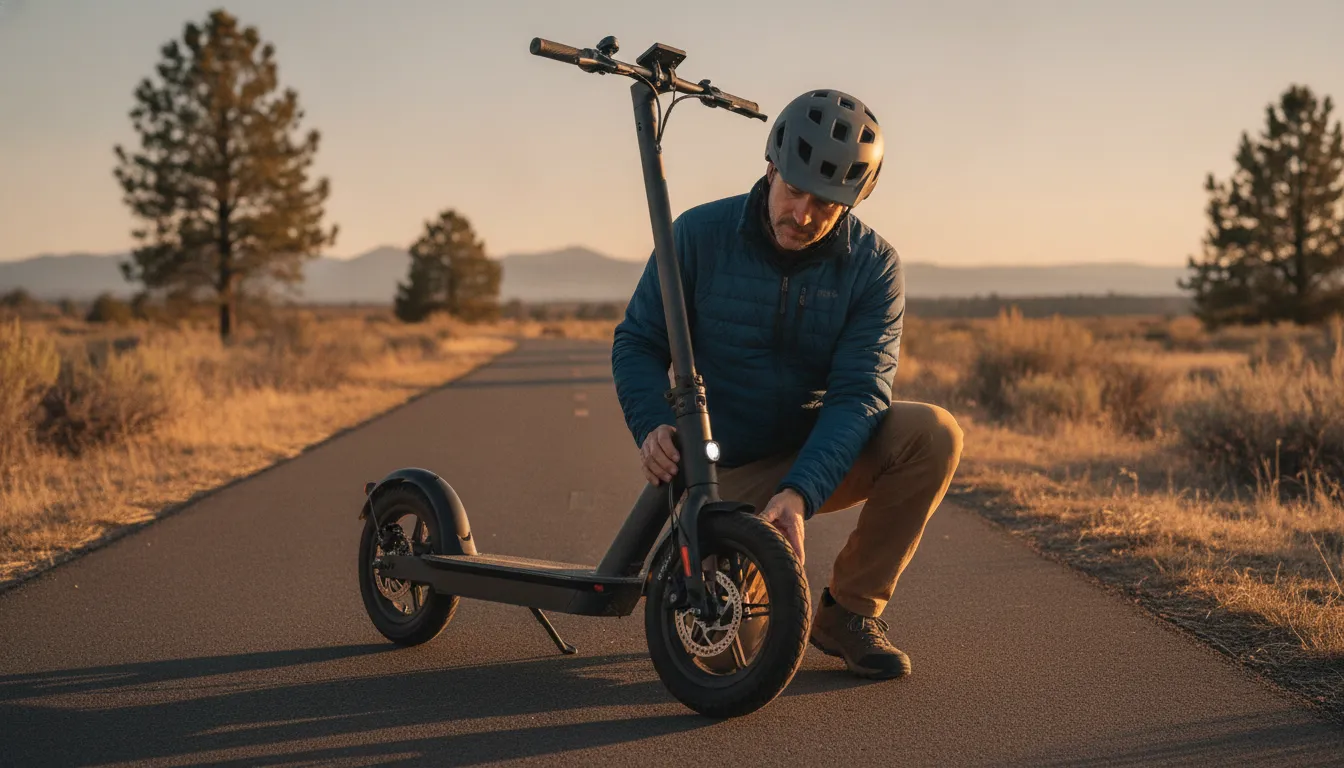
A 10 to 20 mph commuter scooter can be a sensible fit for short trips, errands, and neighborhood travel. It leaves more room for smooth braking and route awareness. A 20 to 30 mph scooter can make longer trips feel quicker, but it also demands more attention to pavement quality, traffic, stopping distance, and rider technique.
Manufacturers usually measure top speed under specific conditions. The test may use level pavement, a full battery, moderate temperatures, and a rider whose weight is within the rated capacity. Real-world speed can be lower on a long incline, into a headwind, on rough pavement, or late in a ride when the battery charge has fallen.
Rider weight and cargo affect acceleration and hill performance. Tire pressure matters because underinflated tires increase rolling resistance and can change handling. Cold weather can also reduce battery performance. These factors do not make a product specification useless. They explain why it should be treated as a reference point rather than a promise.
Use the route as your starting point. A flat, paved commute calls for a different balance than a hilly trip around Bend. If you expect to ride on gravel, exposed roads, or mixed surfaces, prioritize predictable control, braking, tire design, and support instead of selecting solely by the top-speed number.
What Does Motor Wattage Tell You About Electric Scooter Speed?
Motor wattage tells you more about how well a scooter maintains speed under load than the exact top speed it will reach. Higher output can help with hills, acceleration, heavier riders, and headwinds, but battery voltage, controller settings, torque, gearing, tires, and total vehicle weight also affect performance.
Specifications may list nominal wattage, peak wattage, or both. Nominal wattage describes the approximate output a motor can sustain during normal use. Peak wattage is a short-term maximum that may be available during acceleration or hill climbing. Two scooters with similar wattage figures can feel different if their batteries, controllers, thermal management, or software settings differ.
Why wattage does not predict top speed by itself
A lower-output commuter motor may reach its listed speed on flat pavement, then slow on a steep grade. A higher-output motor may hold more momentum on that grade, but it still cannot overcome every combination of load, wind, slope, and low battery. Maximum speed is a system result, not a calculation based on one label.
Voltage and battery capacity matter as well. Voltage affects the electrical potential available to the system, while capacity affects how much energy is stored. The controller determines how that energy reaches the motor. Comparing a 500-watt motor with an 800-watt motor without checking the battery and rated load can produce a misleading conclusion.
When torque matters more than a headline number
Torque is the motor's turning force. It is especially noticeable when starting from a stop, climbing, or carrying additional weight. A scooter with useful low-speed torque can feel stronger in a hilly neighborhood even if its advertised top speed is similar to another model.
For an adult rider, the better question is whether the scooter can provide comfortable, controlled performance on the intended route. Check the current specifications for motor output, rider capacity, tire size, braking system, and recommended use. If possible, a controlled test ride can reveal more about acceleration and stability than wattage alone.
How Do Speed and Range Trade Off on an Adult Electric Scooter?
Higher speed usually uses more battery energy, so riding at the maximum setting can shorten usable range. Hills, wind, rider weight, tire pressure, stop-and-go traffic, and riding mode affect the result. A scooter with enough battery reserve for the return trip is often more practical than one that is faster for only part of the route.
| Riding priority | Useful approach | Trade-off |
|---|---|---|
| Efficient short trips | Eco or lower riding mode | More conservative pace and lower battery demand |
| Balanced commuting | Standard riding mode | Practical blend of speed, comfort, and range |
| Quick travel where permitted | Higher mode on suitable routes | Faster battery use and less range reserve |
| Hills or heavier loads | Prioritize capacity and charge | Speed may drop as the system works harder |
Published range is also a test result, not a guarantee. A manufacturer may measure it at a steady speed with a specified rider and ideal conditions. Real trips include starts, stops, inclines, turns, wind, and temperature changes. Plan for the complete outing, including the return trip, rather than assuming the maximum range figure will always be available.
Battery care supports consistent performance. Follow the manufacturer's charging and storage instructions. Avoid leaving a battery depleted for extended periods, and use the specified charger. If acceleration changes suddenly or the scooter loses hill performance, have the system inspected instead of compensating by riding faster downhill.
Range planning is particularly important in Central Oregon. A route that looks short on a map can include elevation changes, exposed stretches, or weather that increases energy use. Choose a riding mode that gives you a margin, and confirm the current range and charging specifications for the exact model and configuration.
Voltaire Cycles can help you compare Segway electric scooters and mobility products by route, rider profile, and desired range. The goal is a scooter that works for the trips you actually take.
How Fast Do Adult Electric Scooters Go Legally in Oregon?
A scooter's mechanical capability and the speed you may legally use are separate questions. Oregon requirements can depend on the device, roadway, bike lane, sidewalk, shared-use path, local jurisdiction, and land manager. Review current state guidance and route-specific signs before riding, because a product's advertised top speed does not grant permission to use it everywhere.
Start with the current Oregon Revised Statutes and the Oregon DMV micromobility guide. These sources provide a better basis for decisions than an old product listing or a general speed chart. Laws and agency guidance can change, so check them again when your route, vehicle, or local rules change.
Route context matters. Rules may differ between a public street, a bike lane, a sidewalk, and a multiuse path. Cities, counties, parks, private property owners, and trail managers can also impose restrictions. Before riding in Bend or elsewhere in Central Oregon, review posted requirements for the specific route and give pedestrians and other road users adequate space.
When you compare speed, ask three questions: Can I control this scooter comfortably? Can I stop smoothly if conditions change? Is this speed appropriate and permitted on the route? Those questions turn a technical specification into a useful buying decision.
Are Segway Ninebot Scooters Fast Enough for Adult Riders?
Many Segway Ninebot scooters can be fast enough for adult commuting, but the right model depends on the rider, route, comfort level, and desired range. Segway Ninebot is a broad family, not a single performance class. Compare the exact model's speed, weight capacity, tires, brakes, battery, riding modes, and intended use before deciding.
For short paved trips, a commuter-oriented model may provide a comfortable balance of control and efficiency. A rider covering longer distances or regular hills may value stronger hill performance and more battery reserve. Neither use case automatically requires the fastest model available. A stable riding position and predictable braking can make a moderate-speed scooter more useful day after day.
Compare the complete specification
Look beyond the top-speed line. Check how the manufacturer defines range, whether the specification applies to a particular configuration, and whether the listed speed assumes a certain riding mode. Confirm rider capacity and consider the combined weight of the rider, clothing, backpack, and other cargo.
Also consider deck space, handlebar height, lighting, suspension, tire construction, and charging routine. These details affect confidence and comfort. For shoppers who want to compare current adult options, Voltaire's Segway Ninebot electric scooter guide can support the research process, while the live Segway collection provides current product availability and specifications.
Match speed to the local ride
A scooter that feels quick on smooth, level pavement may feel different on a Bend-area incline or in a crosswind. Build speed gradually, leave room for braking, and use a lower mode while you learn the controls. If you are unsure which configuration fits your route, a local conversation and test ride can help you compare stability and ergonomics before buying.
Voltaire Cycles serves Bend and Central Oregon with a local showroom, hands-on guidance, and service support. Online shoppers can also review product details, but current specifications should always come from the exact product page and manufacturer information rather than a generic family description.
What Safety Habits Matter at Higher Scooter Speeds?
Higher speed requires more stopping distance, better preparation, and a route that matches your experience. Treat an adult electric scooter as a serious vehicle. Wear appropriate protection, inspect the scooter, practice control at low speed, and slow down when traction or visibility is uncertain.
- Wear the right protection. Begin with a properly fitted helmet. Gloves, eye protection, long pants, sturdy closed-toe shoes, and optional elbow and knee protection can add useful protection as speed and route difficulty increase.
- Inspect before every ride. Check tire condition and pressure, brakes, lights, throttle response, stem security, handlebar controls, and battery charge. If steering or braking feels inconsistent, stop and arrange electric scooter service and repairs before riding again.
- Practice in a controlled area. Learn smooth starts, gradual braking, cornering, and emergency stops away from traffic and pedestrians. Increase speed only after you can make controlled inputs.
- Choose conditions carefully. Wet pavement, frost, sand, loose Central Oregon dust, potholes, and crosswinds can reduce traction or stability. Slow down or postpone a ride when visibility and grip are poor.
- Leave battery and stopping margin. Plan enough charge for hills and the return trip. Leave extra following distance because a higher speed gives you less time to respond to gravel, doors, animals, or unexpected movement.
For additional context, Voltaire's electric scooters for adults guide and commuter scooter review cover related buying considerations. Those articles support comparison, while this guide focuses on speed, route fit, and legal awareness.
Talk with Voltaire Cycles about the right adult scooter setup in Bend
Frequently Asked Questions
How fast do adult electric scooters go?
Many commuter models travel about 10 to 20 mph, and faster mid-range models commonly reach 20 to 30 mph under favorable conditions. High-performance models can go faster, but actual speed depends on rider weight, hills, wind, tire pressure, battery charge, riding mode, and the exact model.
Does higher wattage always mean a faster scooter?
No. Wattage can help a scooter maintain speed under load, accelerate, or climb hills, but top speed also depends on voltage, controller settings, battery, tires, total weight, and software. Compare the complete specification instead of treating motor wattage as a guaranteed speed.
Are Segway Ninebot scooters suitable for adults?
Many are, but Segway Ninebot includes different models for different routes and riders. Check the exact model's speed, rider capacity, range, brakes, tires, and intended use. A test ride can help you judge standing comfort, stability, and control before buying.
Can I ride an electric scooter at its maximum speed in Oregon?
Not automatically. Mechanical capability is different from lawful operation. Check current Oregon statutes, DMV guidance, local rules, posted signs, and land-manager requirements for the specific road, path, sidewalk, or trail. Always choose a speed that leaves room for control and safe stopping.
Find a Practical Adult Electric Scooter
The answer to how fast adult electric scooters go is a range, not one universal number. For many riders, 10 to 20 mph is a practical everyday pace. Faster models can serve longer commutes or specific performance needs, but they require more battery planning, stronger route awareness, and more disciplined control.
Start by identifying your normal distance, hills, surfaces, weather, cargo, and legal routes. Then compare the complete Segway Ninebot specification, not just its advertised top speed. Voltaire Cycles of Central Oregon can help you evaluate current options, plan a test ride in Bend, and connect you with service when your scooter needs attention.