

Electric Dirt Bike Maintenance: Practical Service Guide
Electric dirt bike maintenance is simpler than servicing a gas motorcycle in some ways, but off-road riding still creates heat, vibration, mud, dust, and impact that wear on safety-critical parts. A short post-ride routine protects the battery, chain, brakes, tires, wheels, suspension, and fasteners before a small concern becomes a trail problem. This guide separates checks most owners can perform from electrical work that belongs with a qualified technician.
Schedule a maintenance check with Voltaire Cycles in Bend
What does electric dirt bike maintenance include?
Electric dirt bike maintenance includes cleaning and drying the chassis, checking the chain or belt, inspecting brakes and tires, looking for loose fasteners, and caring for the battery and charger. It also includes knowing when to stop riding and have a qualified technician inspect electrical, structural, suspension, or high-power drivetrain concerns.
The right goal is not to make every owner a mechanic. It is to create a repeatable inspection habit. Dirt can hide a leaking seal, vibration can loosen a critical fastener, and a damaged cable can become more serious when exposed to water. A clean bike is easier to inspect than a bike covered in dried mud.
Owner checks and technician work are different
Owners can usually wash carefully, wipe components dry, check tire condition, and inspect brake feel. They can look for obvious damage, verify that the chain is lubricated, and follow the model manual for charging and storage. Keep the bike powered off during inspection, and remove the battery only if the manufacturer's instructions say it is user-removable.
Do not open a lithium-ion battery pack, bypass a fuse, repair high-voltage wiring, or change controller settings without the correct procedure. Do not straighten a damaged frame or continue riding after a crash that may have affected the fork, swingarm, wheel, battery mount, or motor cable. A high-power electric dirt bike can store substantial energy even when it is switched off. If you are unsure whether a repair is safe, stop and ask a qualified service provider.
How often should you service an electric dirt bike?
Inspect an electric dirt bike before every ride, clean it after muddy or wet rides, and perform a more complete inspection at regular riding intervals. The exact schedule depends on the owner's manual, hours ridden, terrain, rider weight, weather, and impacts. Severe use calls for earlier inspection, not a longer interval.
| Timing | Checks to complete |
|---|---|
| Before every ride | Brake lever feel, tire condition and pressure, throttle response, chain or belt condition, visible fasteners, battery fit, and signs of leaks or damage. |
| After every ride | Remove dirt, inspect for new damage, dry the bike, and note unusual noises, heat, vibration, warning lights, or changes in handling. |
| After muddy, wet, or dusty riding | Give extra attention to connectors, seals, bearings, brake rotors, chain, sprockets, suspension surfaces, and the battery mounting area. |
| At the interval in the owner's manual | Have a qualified technician inspect torque-critical fasteners, wheel bearings, suspension, brake wear, drivetrain alignment, electrical connections, and software or diagnostic concerns. |
| Before seasonal storage | Clean and dry the bike, follow the manufacturer's battery storage instructions, protect it from moisture and impact, and check it periodically as directed. |
Keep a simple service note with the date, riding conditions, parts inspected, and symptoms noticed. That record helps you spot patterns and gives a technician useful context if a warning returns.
How do you clean an electric dirt bike safely?
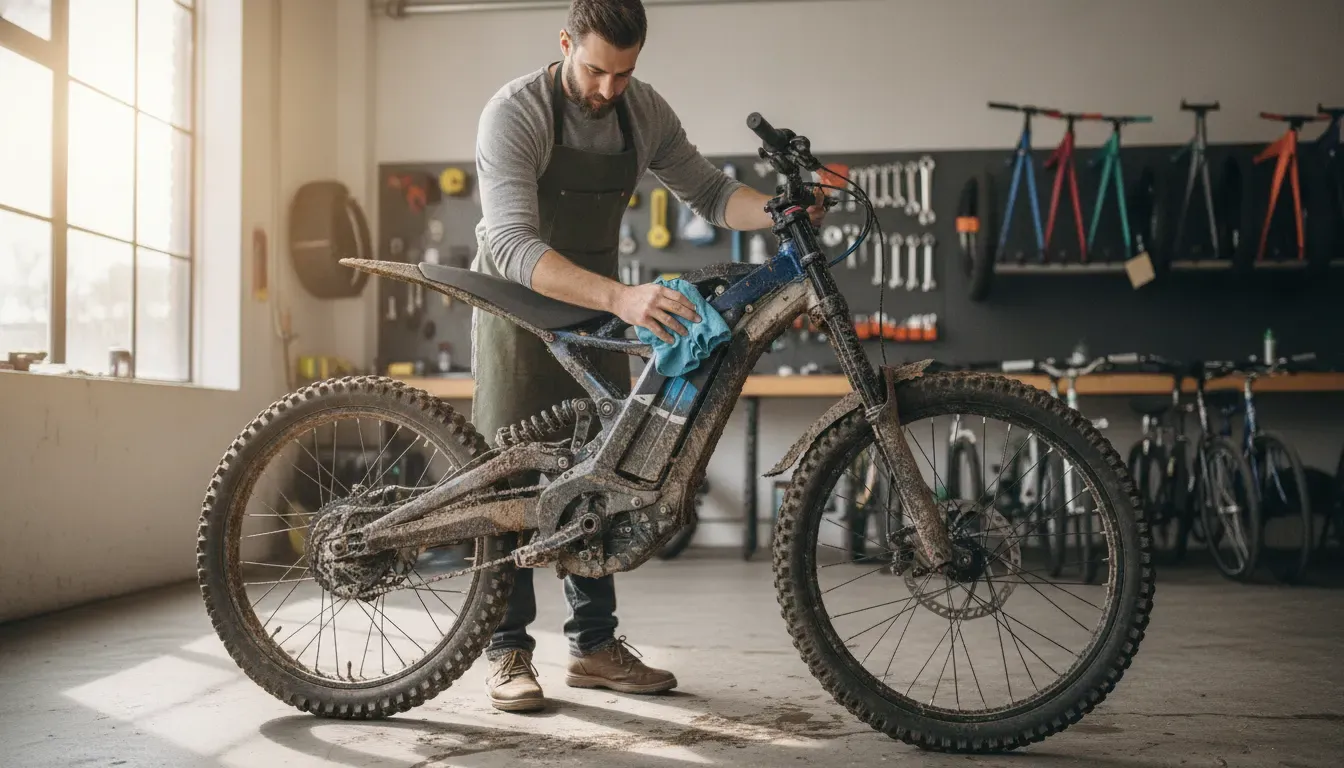
Clean an electric dirt bike with the power off, a soft brush, clean water used sparingly, and a dry cloth. The aim is to remove abrasive dirt without forcing moisture into the battery, display, controller, motor cable, bearings, seals, or connectors. Never use a pressure washer on an electric dirt bike.
- Power down first: Turn the vehicle off, remove the key or disable the app connection if applicable, and let hot components cool.
- Remove loose dirt: Use a soft brush or low-pressure rinse away from sensitive electrical areas. Do not direct water into connectors, the charging port, display, motor openings, or battery contacts.
- Clean the chassis: Wipe the frame, swingarm, fork lowers, pegs, fenders, and wheels with a damp cloth. Use a separate brush for the chain and sprocket area.
- Dry before storage: Wipe the bike dry, rotate the wheels by hand to check for roughness, and let hidden moisture evaporate before charging or covering the bike.
- Inspect while clean: Look for cracks, bent parts, fluid residue, scraped cables, missing hardware, damaged seals, or new play in the wheels and suspension.
Cleaning is also a diagnostic step. If a rinse reveals water inside a connector, a loose battery mount, or damage around the motor cable, do not reconnect power just to see whether the bike works. Photograph the area and arrange an inspection.
How do you maintain the chain or drivetrain?
Maintain the chain or drivetrain by keeping it clean and checking alignment and slack against the owner's manual. Lubricate it with a product suited to the riding conditions, and inspect the sprockets for hooked or damaged teeth. Belt-driven models need a model-specific tension and condition check rather than chain lubricant.
After a dusty ride, brush grit from the chain before adding lubricant. After a wet ride, dry the chain promptly and apply the correct lubricant to the chain rollers, wiping away excess that would attract more dirt. A chain that is too loose can slap, derail, or damage surrounding parts. A chain that is too tight can load bearings and suspension movement.
Check that the rear wheel remains aligned and that the chain guide, guard, and axle hardware are secure. Do not guess at a torque value. Use the value in the model's service documentation or have a technician perform the adjustment. Replace a chain, sprocket, belt, or guide when wear, damage, or repeated adjustment indicates that cleaning alone is no longer enough.
Ask Voltaire Cycles about drivetrain and brake service in Bend
What should you check on brakes, tires, wheels, and fasteners?
Check the brakes, tires, wheels, and fasteners before every ride because these systems control traction and stopping. Squeeze the brake levers for a firm, consistent feel. Inspect rotors and pads for contamination or unusual wear, check tire pressure against the manufacturer's specification, and look for cuts, bulges, loose spokes, rim damage, or axle movement.
- Brakes: A soft lever, grinding sound, pulsing rotor, leaking hose, or sudden change in stopping power needs attention before riding. Keep lubricant and cleaners away from pads and rotors.
- Tires: Check tread, sidewalls, valve stems, and pressure when the tires are cold. Off-road terrain may tempt riders to change pressure, but use a safe range appropriate for the model and terrain.
- Wheels: Lift each wheel just enough to check for lateral movement, rough bearings, loose spokes, or a bent rim. Stop if the wheel does not run true.
- Fasteners: Look at the handlebar, stem, axle hardware, brake mounts, suspension linkage, foot pegs, fenders, battery mount, and motor mounts. Vibration and impacts can expose looseness.
- Suspension: Keep fork tubes and shock surfaces clean. Inspect for oil residue, scratches, damaged seals, or a change in damping. Do not disassemble suspension components without the correct tools and training.
Never treat a fastener check as an invitation to tighten everything as hard as possible. Over-tightening can damage threads, pinch a bearing, distort a component, or create a new safety problem. Follow the service manual or use professional service for torque-critical work.
How should you charge and store an electric dirt bike battery?
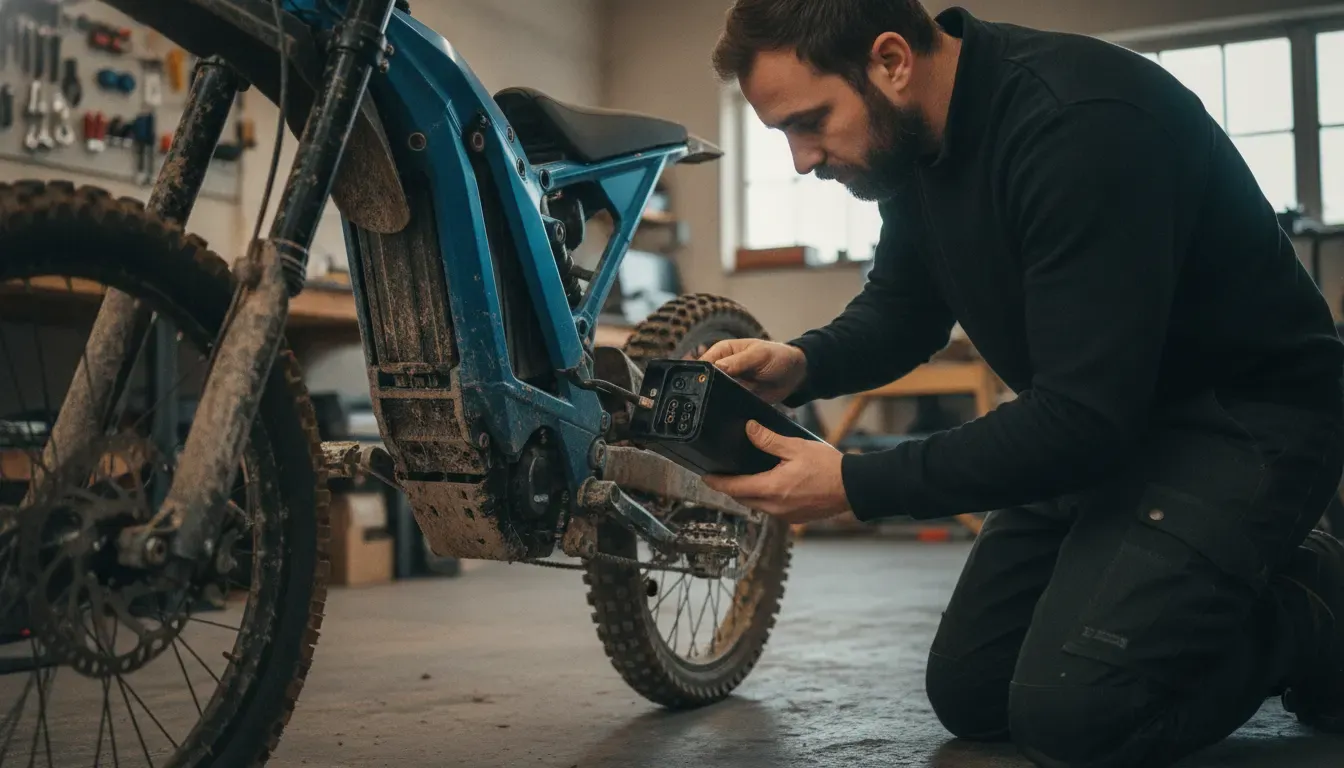
Charge and store the battery with the manufacturer-approved charger, in a dry and appropriate location, while following the model manual's temperature and storage guidance. Do not charge a visibly damaged, swollen, leaking, unusually hot, or foul-smelling battery. Keep charging supervised and away from combustible materials.
The CPSC micromobility safety guidance recommends manufacturer-approved batteries and chargers, supervised charging, and following recall and disposal instructions. The NFPA e-bike safety guidance also emphasizes using the correct equipment and stopping use when a battery shows signs of damage or abnormal behavior.
- Inspect the charger, cable, plug, charging port, and battery contacts before use.
- Use the charger specified for the vehicle. Do not substitute a charger because the plug appears to fit.
- Do not charge immediately after a hard ride if the battery or charger is still hot. Let the system cool according to the owner's manual.
- Keep the battery dry and protected from impact. Do not store it where flooding, freezing, excessive heat, or direct sun can affect it.
- For seasonal storage, use the charge level, inspection schedule, and temperature limits specified by the manufacturer rather than a generic internet rule.
- If a battery is damaged or involved in a crash, move people away, avoid handling it unnecessarily, and contact the manufacturer or a qualified service provider for instructions.
What should Segway Xaber 300 owners include in their routine?
Segway Xaber 300 owners should use the model's official manual as the final authority for inspection, charging, and service steps. Apply the same disciplined checks for brakes, tires, drivetrain, suspension, fasteners, battery mounting, and cables. Voltaire's product information identifies the Xaber 300 as an off-road electric dirt bike with high output, so safe service boundaries matter.
The current Voltaire product page lists a 3.17 kWh battery, a 72V 8A charger, and 100 to 240V AC charger compatibility. It also lists four-piston hydraulic brakes with 220 mm rotors, adjustable Marzocchi suspension, regenerative braking, selectable traction control, and a 187 lb curb weight. Those are product-specific details, not a substitute for the manual. Confirm the configuration and current documentation before ordering parts or adjusting components.
For the manual's pre-ride, post-ride, battery, and maintenance instructions, use the official Segway Xaber 300 user manual. For product details and current purchasing information, see Voltaire's Segway Xaber 300 product page. Do not modify the bike's electrical system or defeat safety controls to change performance.
When should an electric dirt bike go to a service center?
Take an electric dirt bike to a service center when the issue involves a damaged battery, electrical connector, controller, motor cable, or repeated error code. Professional help is also appropriate for the brake hydraulic system, suspension internals, frame or fork damage, wheel bearing, or torque-critical assembly. Stop riding first if the bike changes behavior, overheats, smells unusual, loses braking, or suffers a significant impact.
- The throttle responds unexpectedly, cuts out, or remains active after you release it.
- A battery or charger becomes unusually hot, smells abnormal, leaks, swells, or shows impact damage.
- The display reports a persistent fault, the motor makes a new grinding noise, or power delivery changes sharply.
- The brakes feel soft, pull unevenly, leak fluid, or require more lever travel than usual.
- The frame, fork, swingarm, wheel, handlebar, battery mount, or suspension shows a crack, bend, or unusual play.
- A chain repeatedly derails, the rear wheel shifts, or drivetrain noise continues after cleaning and correct lubrication.
- Water entered an electrical connector or charging port, especially while the vehicle was powered on.
Voltaire Cycles offers multi-brand bicycle repair and technical service in Bend, including electrical-system work across many brands and styles. The Bicycle Repair Services page is the right place to review service options and request help. Bring the model information, charger, error-code photo, and a short description of when the symptom occurs.
Request an electric dirt bike service consultation in Bend
Frequently Asked Questions: Electric Dirt Bike Maintenance
Are electric dirt bikes easier to maintain than gas dirt bikes?
Electric dirt bikes eliminate routine engine oil, spark plug, fuel, and exhaust service, but they still need regular care for brakes, tires, wheels, chain or belt, suspension, fasteners, battery, charger, cables, and connectors. Their high torque and off-road use make inspection habits essential.
Can I pressure-wash an electric dirt bike?
No. Pressure washing can force water past seals and into connectors, bearings, displays, controllers, motors, and battery areas. Use a soft brush, a damp cloth, and low-pressure water away from sensitive components, then dry the bike before charging or storing it.
How often should I lubricate an electric dirt bike chain?
Lubricate the chain according to the owner's manual and riding conditions, with extra attention after wet, muddy, or dusty rides. Clean grit first, use an appropriate lubricant, and wipe off excess. Check chain slack and alignment at the same time.
Can I repair an electric dirt bike battery myself?
Do not open or rebuild a lithium-ion battery pack yourself. Battery cells, protection circuits, and high-energy connections require qualified handling. Stop using a damaged or abnormal battery and contact the manufacturer or a qualified service provider for safe next steps.
Does Voltaire Cycles service electric dirt bikes?
Voltaire Cycles provides multi-brand bicycle repair and technical service in Bend, including electrical-system work across many brands and styles. Contact the shop with the model, symptom, and any visible damage so the team can identify the appropriate service path.
Consistent checks are the simplest form of electric dirt bike maintenance. Clean after hard rides, inspect before the next one, follow the Segway Xaber 300 manual when applicable, and bring safety-critical or electrical concerns to qualified service support. Riders in Bend and Central Oregon can also browse the Segway collection at Voltaire Cycles for product guidance and local support.