

Electric Bike Rear Rack: Fit, Weight & Setup
An electric bike rear rack can turn a comfortable e-bike into a practical everyday vehicle. It gives panniers, a trunk bag, or a basket a stable place to carry groceries, work gear, a rain layer, or trail essentials without loading your back or handlebars. The right rack is not simply the strongest-looking option, though. It must match your frame, wheel and tire setup, brakes, battery location, mounting points, and the load you plan to carry.
Browse electric bikes at Voltaire Cycles and plan a rack-ready setup with expert guidance.
This guide covers a rack mounted to the e-bike, not a hitch, trunk, or roof rack used to transport it on a car. Compare vehicle carriers separately and check their carrier, hitch, and vehicle limits.
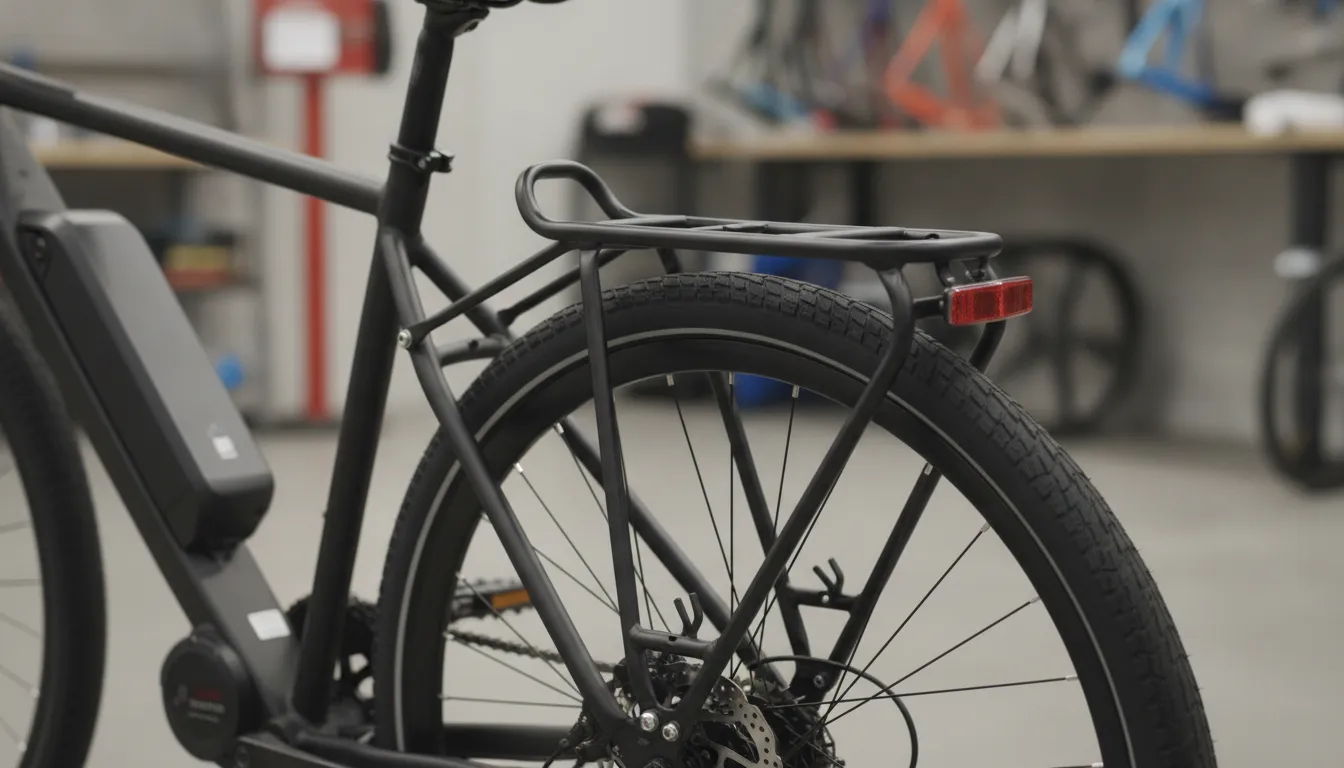
What Is an Electric Bike Rear Rack?
An electric bike rear rack is a platform above and beside the rear wheel for panniers, rack-top bags, baskets, or secured light cargo. Frame-mounted versions use threaded eyelets near the dropout and seat stays; alternatives may attach to seat stays or the seatpost.
The rack, frame, wheel, axle, hardware, bag hooks, and cargo share forces during braking, turning, and rough riding. A rack can fit physically yet be wrong if it blocks a battery, rubs a rotor, exceeds the bike's payload, or makes handling difficult.
A rear rack keeps commuter and utility cargo off your back and handlebars. Choose panniers, a top bag, or a basket only after checking the rack's rails, deck, dimensions, and load limit.
How Do You Choose an Electric Bike Rear Rack?
The best electric bike rear rack matches the exact bicycle and the job it must perform. Start with the model and generation, then confirm mounting points, brake and fender clearance, tire width, battery access, and the lowest applicable load rating. Compare rack width, rails, bags, and baskets only after those checks.
Start with the exact bike
Record the bicycle's make, model, generation, frame size, wheel size, tire width, and frame style. Step-through, fat-tire, full-suspension, rear-hub-motor, and integrated-battery bikes can need different hardware. "Universal" is not proof of e-bike fit. Mounting-hole position and clearance matter more than the label.
For Segway shoppers, Voltaire's Segway e-bike collection includes models for different kinds of riding. Its product pages do not establish that one generic rear rack fits every Segway model. Verify compatibility with current instructions and a qualified fit check.
Check the mounting pattern
- Lower mounts: Look for threaded eyelets near the rear dropout or an approved axle adapter. Do not place a rack stay against a brake caliper, rotor, derailleur, motor cable, or axle hardware.
- Upper mounts: Check the seat-stay eyelets or the supplied stays and clamps. They should meet the frame at approved points without bending the rack or forcing a bolt into alignment.
- Full suspension: Confirm that the rack and its stays remain clear through the full suspension movement. A rack that is safe at rest can contact the tire or frame while the suspension compresses.
- Seatpost mounts: These can solve an eyelet problem for light cargo, but their limits and fit are specific to the rack, post, frame, and load. Never treat one as a heavy-duty substitute without its instructions.
How Much Weight Can an Electric Bike Rear Rack Carry?
There is no single safe load number for every electric bike rear rack. Use the lowest limit stated by the rack, e-bike, frame or axle system, pannier or basket, and mounting hardware. Count the rack and bags when the instructions do. A rack rating never overrides the bicycle's total payload limit.
As a broad reference, Cycling UK's e-bike load guidance notes that many rear pannier racks are rated around 20 to 30 kilograms. That is not permission to load your bike to that amount. Read current manuals because gravel, potholes, braking, and uneven cargo create forces beyond a stationary weight test.
Voltaire's catalog includes the Topeak Super Tourist DX MTX rear rack, whose page publishes a 55-pound maximum load plus wheel and pannier details. That figure belongs to that rack, not every e-bike or Segway. Fit, approved mounts, hardware, and the bike-side limit still control.
Make a simple load check before riding:
- Count the rack, panniers, bag, basket, and cargo as the instructions require.
- Compare the rack, bike, bag, hook, strap, axle, and hardware limits.
- Use the lowest limit, leave a sensible margin, and reduce the load for rough routes or poor handling.
If the rack or bike manufacturer does not publish the applicable capacity, pause the purchase and ask for confirmation.
Where Should Panniers and Cargo Sit?
Place heavy items low, close to the bike's centerline, and balanced from side to side. This reduces rear-heavy handling and keeps steering more predictable. Put lighter bulky items in a rack-top bag or basket only when they are restrained and do not block lights or your view.
Panniers
Panniers are often the most stable routine-cargo option because they sit beside the rack. Confirm that the hooks engage the rail, the lower stabilizer catches a compatible tube, and the bag cannot swing into the wheel. Check heel clearance, especially on a small frame or with a wide pannier.
Trunk bags, baskets, and straps
A rack-top bag suits tools, a charger, clothing, or small essentials. A basket handles irregular items, but use a closed bag, cargo net, or rated straps instead of loose loops. Keep straps away from the wheel, chain, belt, rotor, and derailleur, and prevent cargo from sliding into the rider or saddle.
Children, pets, and oversized cargo
Do not install a child seat, pet carrier, or passenger accessory just because its clamps fit. Those uses require an explicitly approved rack, seat, bicycle, and mounting arrangement. For oversized or heavy loads, a dedicated cargo bike or trailer may be safer. Practice any unusual load with gentle braking and slow turns in a low-traffic area.
How Do You Check Battery, Brake, and Tire Clearance?
Clearance is a moving target. Before tightening the rack, keep every tube, stay, clamp, hook, strap, and load away from the battery, charging port, motor cable, brakes, wheel, fender, light, and suspension. Repeat the check on the ground and through available suspension travel.
- Battery and charging: Ensure the rack or bag does not block battery removal, the charging port, latch, or service area. Bosch's rack-battery documentation illustrates why battery position is part of rack-area design, not an afterthought.
- Brake and wheel: Keep stays, bags, straps, and cargo clear of the disc rotor, caliper, spokes, tire sidewall, and derailleur. Spin the wheel and apply the brake while observing for rubbing.
- Fenders and mudguards: Check the gap above the tire and around fender stays. Add cargo only after confirming that a loaded bag will not flex into the tire on bumps.
- Lights and reflectors: Do not cover a factory tail light or reflector. If a rack has a light mount, confirm that the light position and wiring are appropriate for that rack and bike.
- Suspension: On a full-suspension bike, move the suspension as directed by the manufacturer or have a technician check it. Never rely on a static clearance measurement alone.
The Segway front rack listed by Voltaire is described for the Xafari, Myon, and MUXI. It is a front rack, not proof that a rear rack fits those models or has the same capacity. Keep that distinction in mind when planning a Segway setup.
Which Rack Type Fits Different Riding Jobs?
Rack choice should follow the cargo and bicycle. A model-specific frame rack is often the cleanest solution when approved. A standard eyelet rack can be versatile when dimensions and mounting match. A seat-stay rack may suit certain frames, but its straps and rating need careful review.
| Rack or cargo approach | Good fit for | Checks before use |
|---|---|---|
| Model-specific rear rack | A bike with a documented accessory option | Exact model, generation, frame size, hardware, and published load limit |
| Frame-mounted eyelet rack | Commuting, panniers, and ordinary errands | Eyelet alignment, wheel and fender clearance, brake and battery access |
| Seat-stay-mounted rack | Compatible hardtails or full-suspension bikes when approved | Strap placement, suspension movement, frame finish, and lower load limit |
| Rack-top basket or bag | Small, quick-access, or bulky light items | Deck size, securement, light clearance, and high-center-of-gravity handling |
| Trailer or dedicated cargo system | Bulky loads that exceed a rack's practical capacity | Hitch approval, trailer rating, braking, turning, and route conditions |
A rear cargo rack is not a vehicle hitch rack. Voltaire's Pivot Pro vehicle hitch e-bike rack carries an e-bike on a vehicle, not panniers while riding. Hitch capacity, tongue weight, vehicle fit, and e-bike loading are separate questions.
How Do You Install an Electric Bike Rear Rack?
Start with a dry fit. Place the rack on the bike without fully tightening it. Confirm that the platform is centered, the stays reach approved mounts without force, and nothing contacts a moving part. If a bolt does not line up, stop. Do not pull the frame into alignment or substitute hardware without approval.
- Read the rack instructions and the e-bike manufacturer's accessory guidance.
- Remove only the hardware needed for the approved mounting points and keep brake, axle, and motor components undisturbed.
- Set the rack height and platform level while preserving tire, fender, brake, cable, light, and battery clearance.
- Install the supplied spacers, washers, stays, and fasteners in the stated order.
- Snug all fasteners, center the rack, then tighten to the manufacturer's torque specification with a suitable tool.
- Spin the wheel, test the brakes, check the derailleur or belt path, and inspect the rack from both sides.
- Take a short unloaded test ride, then recheck the fasteners and stays. Add a light, balanced load before carrying a full setup.
Ask a shop for help when the bike lacks eyelets, uses unusual axle hardware, has full suspension, places a battery or tail light near the rack, or requires an adapter. Professional guidance is worthwhile when torque, brake clearance, or accessory approval is unclear.
What Should You Inspect Before Every Ride?
A quick inspection prevents many rack problems. Gently test the rack for movement, then look for loose bolts, bent stays, cracks, damaged straps, loose hooks, and rub marks. Check the wheel, brake, tire, fender, light, and battery access again after loading the bags.
- Confirm all rack fasteners and stays remain tight.
- Confirm pannier hooks and lower retainers are fully engaged.
- Secure every strap, net, or tie away from the wheel, rotor, chain, and belt.
- Check that cargo is balanced and does not move when the bike is rocked gently.
- Verify brake levers feel normal and the rack or load does not affect cable movement.
- Check tire pressure and inspect for tire or fender contact under the loaded setup.
- Confirm tail lights, reflectors, charging access, and battery latches remain usable.
- Reduce speed and load when conditions are rough, wet, dusty, or unfamiliar.
Stop riding if the rack shifts, a fastener backs out, a pannier touches the tire, a strap reaches a moving part, the bike begins to steer unpredictably, or the load changes position. Unload the bicycle and correct the cause before continuing.
What Is a Practical Rack Setup for Bend and Central Oregon?
Central Oregon riders may use one bicycle for Bend errands, paved paths, commutes, and recreation access roads. A low, balanced pannier setup suits groceries, clothing, a repair kit, and weather layers. On dusty or rough routes, use closed bags, check fasteners more often, and leave clearance for movement and debris.
Weather and terrain shape the setup. Fenders protect cargo but consume clearance, and a rain cover must stay clear of the wheel. Cold, wind, hills, and cargo change acceleration and stopping, so test the loaded configuration rather than relying on an unloaded showroom feel.
For a Segway Myon or MUXI, start with the current model page and the current accessory documentation. Voltaire's Segway Myon page and Segway MUXI page help shoppers compare the bikes, but neither page should be treated as a universal rear-rack approval or a substitute for a model-specific fit check. The safest recommendation depends on the exact bike, generation, mounting hardware, and intended load.
Electric Bike Rear Rack FAQs
Do electric bikes need a special rear rack?
Not always, but an e-bike often needs a rack chosen for its frame, mounting points, wheel and tire dimensions, brakes, battery, motor hardware, and permitted load. A standard bicycle rack may work when the manufacturer confirms the fit. Check the exact model rather than assuming a universal rack is safe.
Can I put a rear rack on an e-bike with no eyelets?
Some bikes can use an approved seat-stay rack or axle adapter, while others are not suitable for a rear rack. The alternative must match the frame, brake system, axle, tire, suspension, and load. If the mounting points are unclear, ask a qualified shop before buying or drilling, bending, or modifying the frame.
Can I use panniers on an electric bike rear rack?
Yes, when the rack has compatible side rails and the pannier hooks and lower retainers fit securely. Keep heavy items low, balance both sides, and check heel, tire, brake, spoke, and fender clearance. The pannier's own rating and the bike's rear-cargo limit still apply, even when the rack has a higher rating.
Can a rear rack block an e-bike battery?
It can. A rack, bag, hook, strap, or cargo may block a battery latch, charging port, removal path, wiring, or required clearance. Check the empty and loaded setup, and verify the battery position on the exact model. Rack-mounted batteries also make weight placement important.
When should I choose a trailer instead?
Consider a trailer or dedicated cargo system when the load is bulky, unstable, too heavy for the rack, or difficult to keep low and balanced. Check the bicycle and trailer hitch instructions, maximum loads, braking, turning, and route conditions. A trailer is not a way to bypass the bike's total payload limit.
Can a rear rack carry a child seat or passenger?
Only use a child seat or passenger system when the bicycle, rack, seat, and hardware are explicitly approved together. Physical fit is not safety approval. Follow the manufacturer's age, weight, mounting, and inspection requirements. If the documentation is unclear, do not carry a passenger until a qualified professional confirms the complete system.
Choosing a rear rack is a fit and safety decision before it is an accessory decision. Confirm the exact bike, use the lowest applicable load limit, keep cargo low and balanced, protect battery and brake clearance, and recheck the setup after the first ride. For model-specific questions, Voltaire Cycles provides bicycle repair and service support in Bend and can help match a rack, bag, basket, or other cargo solution to your ride.