

Electric Bike Battery Replacement: A Safety-First Guide
Electric Bike Battery Replacement: A Safety-First Guide
A shorter ride than usual does not always mean you need an electric bike battery replacement. Cold weather, steep climbs, a charger problem, dirty contacts, or a change in tire pressure can all reduce apparent range. The right first step is a careful diagnosis. If the battery is damaged, unusually hot, swollen, leaking, or giving off an odd odor, stop using and charging it, move away from it, and contact a qualified e-bike service professional for guidance.
Not sure whether your battery or charger is causing the problem? Request an e-bike service evaluation with Voltaire Cycles of Central Oregon before buying a replacement.
Quick Answer: When Should You Replace an E-Bike Battery?
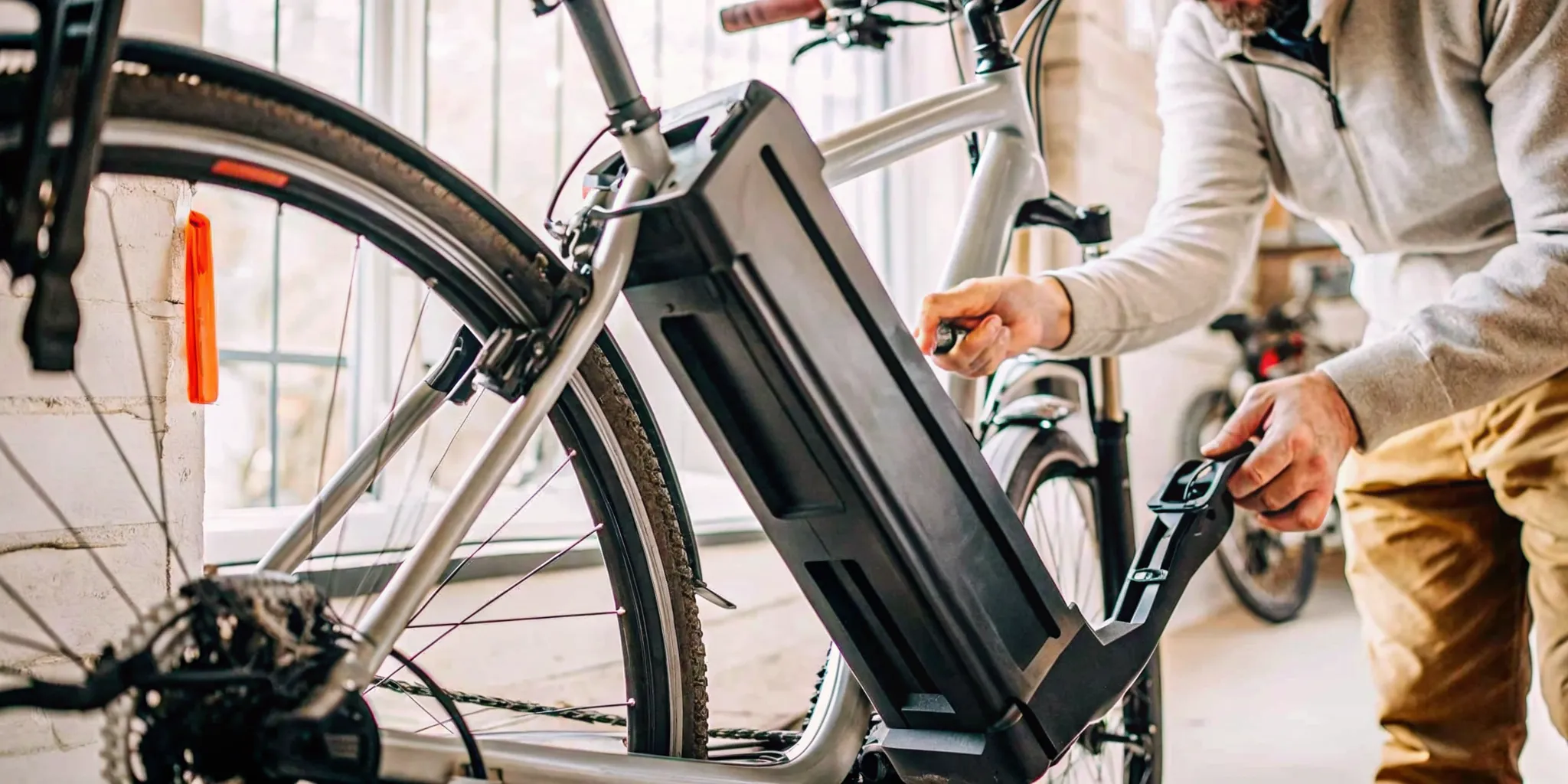
Consider replacing an e-bike battery when a qualified technician confirms that it has suffered substantial, repeatable range loss; will not charge with the correct charger; shuts down unexpectedly under normal load; or has physical damage. Stop using it immediately if you notice swelling, leaking, cracking, unusual heat, smoke, sparks, or a strange odor. Buy only a replacement explicitly approved for your exact bike and electrical system. Never guess based on voltage or connector shape alone.
A battery that seems weak during one cold, hilly ride may still be healthy. A battery that consistently loses power early in similar conditions deserves a closer look. The distinction matters because replacing a healthy battery will not fix a failing charger, loose connection, dragging brake, low tire pressure, or another issue that is consuming extra energy.
Signs Your E-Bike Battery May Need Replacement
Battery performance changes gradually in many cases. Track what the bike does across several comparable rides rather than relying on a single trip. A simple ride log can include distance, assist level, temperature, terrain, starting charge, and ending charge.
Range has dropped consistently
All rechargeable batteries lose usable capacity over time, but normal day-to-day range also varies. Central Oregon riders may notice less range on cold mornings, long climbs, loose surfaces, or rides with a heavy load. A likely battery-health issue appears as a persistent decline under similar conditions, especially when the bike, tires, route, and assist settings have not changed.
The battery will not reach or hold a charge
A pack that stops charging early, loses charge quickly while parked, or will not charge at all may be failing. It could also be a charger, outlet, charge-port, or contact problem. Test only according to the bike manufacturer's instructions and use the charger specified for the system. The U.S. Consumer Product Safety Commission warns consumers not to use so-called universal chargers with micromobility products because incompatible chargers can create a fire hazard.
Power cuts out under normal load
A battery may appear charged while the bike is stationary, then shut down during acceleration or a climb. That symptom can point to a battery problem, but wiring, connectors, the controller, or another system component may also be responsible. Professional diagnosis is safer and usually more efficient than replacing parts one by one.
The pack is physically damaged or behaves abnormally
Swelling, a cracked case, exposed wiring, leaking, impact damage, water intrusion, hissing, smoke, sparks, unusual odor, or abnormal heat are urgent warning signs. Do not ride, charge, open, or attempt to repair the pack. Keep people away from it and follow emergency guidance if there is smoke, fire, or an immediate hazard.
Range Loss Does Not Always Mean Battery Failure
Range estimates are useful, but they are not laboratory measurements of battery health. Before deciding on replacement, compare recent riding conditions with your normal baseline.
| What you notice | Possible cause | Best next step |
|---|---|---|
| Less range only in cold weather | Temporary temperature-related performance change | Compare range again in moderate conditions and store the battery as directed by its manufacturer |
| Less range on steep or loaded rides | Higher energy demand | Compare similar routes, assist levels, rider loads, and tire pressure |
| No charging response | Battery, charger, outlet, port, or contact issue | Stop guessing and have the approved charging system diagnosed |
| Unexpected shutdown on climbs | Battery or electrical-system fault | Schedule a professional electrical diagnosis |
| Swelling, leaking, smoke, unusual heat, or odor | Potentially unsafe battery condition | Stop use and charging immediately; seek qualified guidance |
For a clearer explanation of watt-hours and why two riders can get different results from the same nominal capacity, see our guide to electric bike battery capacity. If the issue is more likely related to daily use and storage, review how to care for your e-bike battery.
What Should You Check Before Buying a Replacement?
An e-bike battery is part of an electrical system, not a generic accessory. A pack may have the same advertised voltage and still be incompatible with the bike's mount, connector, controller, battery-management system, firmware, or charger. The safest replacement path is the one approved by the bike manufacturer and confirmed for the exact model and model year.
- Confirm the battery is the problem. Ask for diagnosis of the battery, charger, charge port, contacts, wiring, and relevant electrical components.
- Identify the exact bike and system. Record the brand, model, model year, serial information, original battery details, and original charger details.
- Verify manufacturer approval. Confirm in writing that the replacement is intended for the exact bike and system.
- Match the physical interface. The mount, locking mechanism, connector, case dimensions, and weather sealing must all be correct.
- Confirm charger compatibility. Use only the charger specified for the replacement battery and bike system. Do not assume an old or universal charger is safe.
- Ask about setup requirements. Some systems may need a dealer inspection, software step, or other manufacturer-prescribed setup.
- Plan responsible recycling. Do not place an e-bike battery in household trash or curbside recycling.
Want help identifying a compatible pack? Browse the current e-bike battery collection, then call or visit the Bend showroom to confirm fit before ordering.
Why the Correct Battery and Charger Matter
Compatibility is more than making the connector fit. The battery, charger, motor, controller, and battery-management electronics are designed to work together. An unapproved component can create poor performance, damage, or a serious safety risk.
Ask whether the replacement follows the bike manufacturer's approved path and whether the applicable system has been evaluated to a recognized safety standard. UL 2849 addresses the electrical system of an e-bike, while UL 2271 addresses batteries for light electric vehicle applications. A certification claim should be verifiable for the relevant product or system, not assumed from a vague marketplace listing.
Do not open a battery case, replace internal cells, bypass its management system, or try to rebuild a questionable pack at home. Lithium-ion battery work calls for specialized training, tools, and procedures. Even when a case looks intact, internal damage may not be visible.
Can You Replace an Electric Bike Battery Yourself?
A removable battery that is confirmed as an exact, manufacturer-approved replacement may be designed for straightforward owner removal and installation. Follow the owner's manual precisely. If compatibility is uncertain, the battery has been damaged, the mount or wiring needs work, or the system requires setup, use a qualified technician.
A professional inspection is particularly valuable when the symptom could come from multiple components. Voltaire Cycles' Bend bicycle and e-bike repair service can evaluate electrical and mechanical factors together instead of treating the battery in isolation.
A safe replacement process should answer these questions
- Is the old battery actually the source of the problem?
- Is the new battery explicitly compatible with the exact bike?
- Is the correct charger available and clearly identified?
- Does the battery latch securely without forcing the mount?
- Does the bike power on and operate normally after installation?
- How should the old pack be transported and recycled?
How to Charge and Store the New Battery Safely
A replacement battery will perform best when it is used according to the manufacturer's instructions from day one. Read the battery, bike, and charger manuals. Charge with the supplied or approved charger, in a dry area, away from the exit path, and with the charging equipment visible enough to notice an abnormal condition. Do not charge a damaged battery.
- Inspect the battery, cord, charger, and charge port before use.
- Keep the pack away from excessive heat and follow the specified storage-temperature range.
- Allow a battery exposed to temperature extremes to return to an appropriate charging temperature before connecting it, as directed by the manufacturer.
- Keep contacts clean and dry using only approved procedures.
- Do not modify connectors or use an adapter to make an incompatible charger fit.
- Follow the manufacturer's long-term storage guidance if the bike will sit unused.
Cold mornings, summer heat, elevation changes, and long climbs are part of riding around Bend and Central Oregon. They can affect range and charging decisions, so treat the manufacturer's temperature guidance as an operating limit, not a suggestion.
Before your next long ride, contact Voltaire Cycles of Central Oregon for practical battery, charging, and service guidance matched to your e-bike.
How Do You Dispose of an Old E-Bike Battery?
Never put an e-bike battery in household garbage or a curbside recycling bin. Lithium-ion batteries require a specialized collection path. Keep the pack intact, protect it from damage, and ask the bike brand, dealer, or a recognized battery recycling program for current instructions. Damaged batteries can require special handling, so tell the collection provider about the condition before transporting the pack.
If the battery is swollen, leaking, hot, smoking, or otherwise unstable, do not transport it casually. Keep people away, follow emergency guidance when necessary, and get instructions from qualified local authorities or a battery professional.
Frequently Asked Questions About Electric Bike Battery Replacement
How long does an electric bike battery last?
There is no single lifespan that applies to every e-bike battery. Chemistry, cell quality, charging habits, storage conditions, temperature exposure, usage, and the bike's electrical system all affect longevity. Track repeatable changes in performance and have the system evaluated when range or reliability declines.
How much does an electric bike battery replacement cost?
Cost varies widely by brand, capacity, system, and availability. Confirm the exact compatible battery before comparing prices. A low price on an unverified marketplace pack is not a bargain if it does not communicate correctly with the bike or charger.
Can I use a higher-capacity battery on my e-bike?
Only if the bike manufacturer explicitly approves that battery for the exact model and system. Higher advertised capacity does not prove electrical, software, mount, connector, or charger compatibility.
Can I use a universal charger with my e-bike battery?
No. Use only the charger specified by the bike or battery manufacturer. Connector fit alone does not establish compatibility, and the CPSC has warned consumers about fire hazards associated with universal micromobility chargers.
Why does my e-bike battery lose range in cold weather?
Cold temperatures can temporarily reduce battery performance. Hills, wind, cargo, low tire pressure, and high assist levels can further reduce range. Compare like-for-like rides in moderate conditions before deciding the battery is worn out.
Should I repair or rebuild an e-bike battery?
Do not open or rebuild the pack yourself. If a battery is faulty or damaged, follow the manufacturer or qualified dealer's approved service and replacement process. Improvised internal repairs can compromise protective electronics, sealing, insulation, and safety.
Get the Diagnosis Right Before You Replace
The best electric bike battery replacement is not simply the pack with the highest capacity or lowest price. It is the exact, approved battery for your bike, paired with the correct charger and installed through a safe support path. Start with diagnosis, take physical warning signs seriously, and recycle the old pack responsibly.
Voltaire Cycles of Central Oregon helps riders in Bend and beyond make informed electric-mobility decisions without the guesswork. Visit the showroom, request a service evaluation, or contact the team before purchasing a replacement battery.